
House of HealthCall us

FUE Hair Transplant vs FUT: Which Method Suits You?

Written and Medically Reviewed By:Dr Nadir AbbasMBBS BA Hons, MRCP (Gastro), FEBGh, FRCPE, PhD (Birmingham), Dual CCT
14 September 2026
FUE Hair Transplant vs FUT: Which Method Suits You?

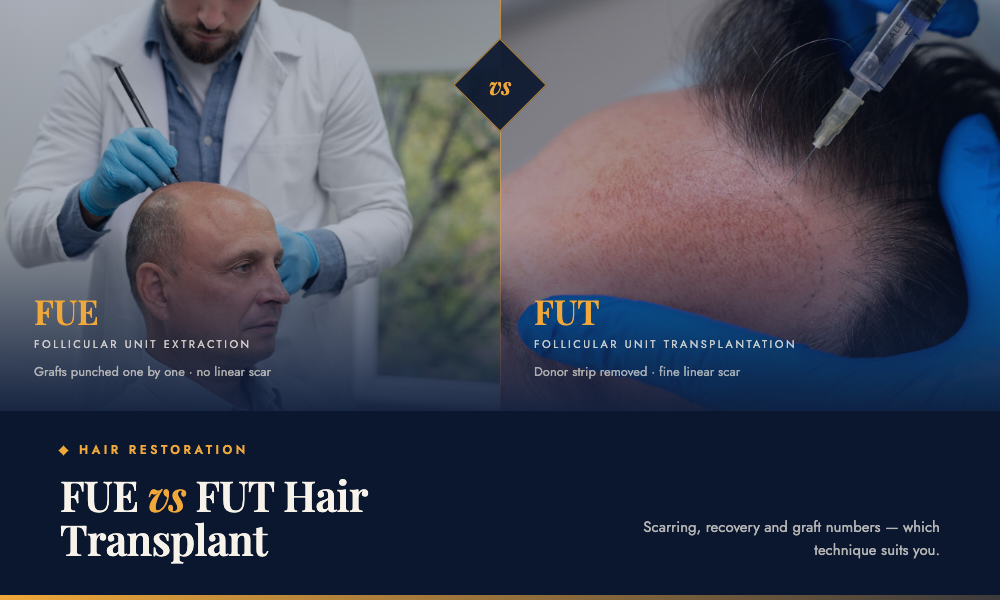
An FUE hair transplant removes healthy hair follicles from the back and sides of the head one by one. A FUT procedure removes a narrow strip of skin instead, and a team divides it into small grafts. Both methods move strong hair into thinning areas, and both can produce natural-looking growth.

The two techniques differ in scarring, healing time, cost and suitability. This guide compares them step by step in plain English, so you understand what each involves before you commit to an FUE hair transplant or the strip method. It also explains why a medical check matters before any surgery, because the right choice depends on your donor hair, your hairstyle and the cause of your hair loss.

Key Takeaways

  • An FUE hair transplant removes follicles one by one; FUT removes a strip of skin
  • FUT usually leaves one straight scar, while FUE leaves tiny dot marks
  • FUE healing tends to feel quicker; FUT stitches come out after about two weeks
  • Neither method suits everyone, so a medical assessment should come first

FUE vs FUT: The Two Main Hair Transplant Methods

Two surgical procedures can restore hair. Both treat male pattern baldness and, in some cases, female pattern hair loss. The result looks similar because the final step of placing grafts into the thinning area works the same way in each method. The real difference lies in how the surgeon collects the donor hair.

Before comparing the methods, one point matters more than any other. Hair loss is not always genetic. Low iron, thyroid problems, hormone changes and stress can all cause shedding, and surgery cannot fix those causes. A doctor-led hair loss clinic can first confirm the diagnosis, and private blood tests can check ferritin, thyroid function, hormones, and vitamin levels. Once the cause is clear, comparing surgical options becomes much easier.

What Is an FUE Hair Transplant?

An FUE hair transplant uses a small punch device, usually under 1mm wide, to remove hair follicles one at a time. The full name is follicular unit extraction. The surgeon takes each graft straight from the donor area at the back and sides of the head, where hair usually resists thinning.

Here is how a typical FUE session works:

  • The team usually shaves the donor area so the surgeon can clearly see each follicle.
  • The surgeon numbs the scalp with local anaesthetic.
  • A punch tool frees each follicular unit, which holds one to four hairs.
  • The team stores the grafts in a chilled solution to keep them healthy.
  • The surgeon makes tiny openings in the thinning area and places each graft at the correct angle.

Each extraction site heals as a small dot. Most people find that an FUE hair transplant leaves visible scars once hair grows back, although very short haircuts can still reveal them if too many grafts are taken from one spot.

Losing Hair and Not Sure Why?

  • Shedding often has a medical cause, such as low iron levels, thyroid problems, or hormonal changes. Our doctor-led team uses AI scalp analysis and blood testing to find the root cause before you consider any surgery.

What Is a FUT Hair Transplant?

A FUT hair transplant removes a narrow strip of skin from the back of the head. The full name is follicular unit transplantation, and many people call it the strip method. A skilled team divides the strip under a microscope into individual grafts, and the surgeon places them into the thinning area in the same way as in FUE.

Key points about the FUT method:

  • The surgeon closes the donor area with stitches or staples.
  • The strip provides many grafts in a single session.
  • A full shave is not usually needed, which suits people who wear their hair longer.
  • Stitches usually come out after 10 to 14 days.

Because the grafts come from one strip, the team can prepare them quickly. That makes FUT a common choice when someone needs extensive coverage in a single day. Unlike an FUE hair transplant, FUT concentrates all healing into one line rather than hundreds of tiny dots.

What Is the Difference Between FUE and FUT?

The main difference between FUE and FUT is how they harvest hair. FUE removes follicles one by one, while FUT removes them together in a single strip. That single change affects scarring, recovery, session size and cost, which is why people comparing an FUE hair transplant with FUT usually focus on those four areas.

FeatureFUE hair transplantFUT hair transplant
HarvestingIndividual follicles with a small punchNarrow strip of skin, divided into grafts
ScarringTiny dot marks across the donor areaOne straight line at the back of the head
StitchesNoneYes, removed after about two weeks
ShavingDonor area usually shavedFull shave not usually needed
Session sizeSlower per graft; big sessions take longerLarge graft numbers possible in one sitting
Early recoveryOften back to desk work in a few daysSlightly longer, with stitch care needed

How Noticeable Is the FUT Scar?

A FUT scar forms as a single straight line where the surgeon removed the strip. Hair above it usually covers it well, so most people hide it easily with a medium-length style. Problems arise when someone cuts their hair very short, because the line can be visible. In some cases, the FUT scar stretches or widens over time, especially after multiple procedures.

FUE scar formation is also different, since there is a random distribution of dots on a larger surface area that do not form any kind of lines. Short hairstyles tend to conceal such scars well enough, but the donor area may appear thin due to excessive graft extraction.

How Do Recovery Times Compare?

FUE hair transplant recovery will normally feel more comfortable in the first two weeks. The differences are as follows:

  • In an FUE transplant, donor areas form scabs and stabilise within 1 to 2 weeks.
  • With a FUT transplant, sutures will remain in place for 10 to 14 days, while the donor area may become quite stiff.
  • In both cases, swelling, redness, and slight pain may occur.
  • Patients typically return to work within days, but must wait 2 to 4 weeks before resuming active workouts.

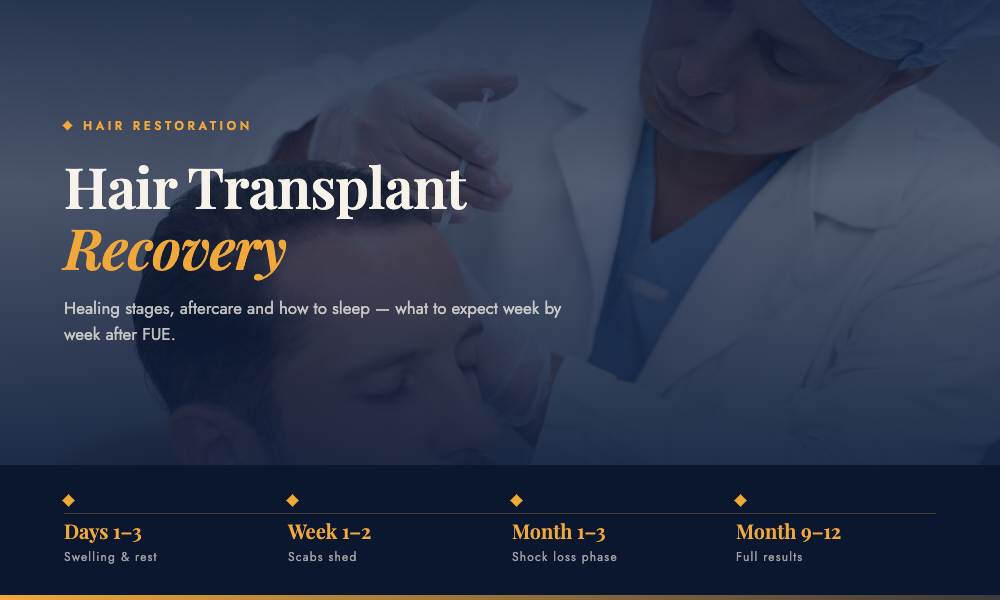
The hair transplantation recovery process is similar for both procedures. Shedding occurs in the first weeks after transplantation; it is part of the shock loss process and is completely normal. Hair grows in about 3 to 4 months, while full results appear in 12 to 18 months. FUE hair transplant does not speed up hair growth; it only affects the healing process in the donor area.

Want Impartial Advice Before Choosing Surgery?

  • Our doctors and trichologists do not perform transplants, so the guidance you receive stays independent. We assess your scalp, explain every option and refer you to trusted surgeons only if surgery genuinely suits you.

Which Costs More: FUE or FUT?

Prices vary widely between clinics, so no single figure applies. In general, FUE costs more per graft because the surgeon extracts each follicle by hand, which takes more time. FUT often costs less for the same number of grafts because the strip method moves more hair in one sitting. The final price depends on the number of grafts, the team's experience, and the complexity of your case, not just the method.

Who Suits Each Hair Transplant Method?

Candidacy matters more than preference. A surgeon assesses your donor hair, your scalp and pattern of loss before recommending either route.

An FUE hair transplant often suits people who:

  • Like to wear their hair short or may shave it in future
  • Want to avoid stitches and a straight scar
  • Need a small to medium number of grafts
  • Prefer a quicker early recovery

A FUT hair transplant often suits people who:

  • Need a large number of grafts in one session
  • Wear their hair at a medium length or longer
  • Have good scalp laxity, meaning the skin moves freely
  • Want to save donor capacity for possible future FUE sessions

Age and stability also matter when deciding. Doctors generally recommend waiting before getting an FUE procedure if your hair loss is not stable yet. This is because placing hair where there should be none can result in abnormal patches.

What Are the Risks of FUE and FUT?

Both procedures are surgical, so both carry risks. A responsible clinic explains these clearly before you book anything. Risks apply whether you choose an FUE hair transplant or FUT:

  • Swelling, redness and soreness in the first days
  • Temporary numbness or tingling, which is more common after FUT
  • Infection or folliculitis, which is uncommon but possible
  • Shock loss, where nearby hairs shed for a while
  • Visible scarring dot marks after FUE or a line after FUT
  • Patchy growth or lower density than expected
  • An unnatural hairline if the planning is poor

Results also depend on the surgeon's skill and honest planning. Hair that was not transplanted can continue to thin over the years, so many people need ongoing medical care to protect the hair around their grafts.

Why a Medical Assessment Should Come First

A hair transplant moves hair; it doesn't treat the reason it fell out. A doctor-led assessment checks for iron deficiency, thyroid problems, hormone imbalance and scalp conditions before anyone recommends surgery. Blood tests, trichoscopy and AI scalp analysis show whether follicles are dormant or gone for good.

Non-surgical care also plays a part. Prescription-strength medication, platelet-rich plasma (PRP), polynucleotide injections and low-level laser therapy can support existing hair, and surgeons often recommend them alongside surgery to protect long-term results. If tests reveal a treatable cause, you may not need an FUE hair transplant or FUT procedure at all.

Conclusion

So, which method works best for you: FUE hair transplant surgery or FUT? With FUE surgery, follicles are extracted one by one, and healing appears as dots, making it ideal for shorter hairstyles. With FUT, a strip is removed, leaving a single scar, and larger sessions are done quickly.

It starts with the cause, not the surgery. The multidisciplinary team led by a doctor at House of Health operates a hair loss clinic in Birmingham that helps you find the true cause behind the fall-out, restore hair without surgery, and provides objective guidance on surgical treatment options when required.

Frequently Asked Questions

Which Hair Transplant Is Best: FUE or FUT?

Many people ask whether FUE or FUT is better, and neither is universally superior. FUE works well with short haircuts and small procedures, while FUT works well for larger procedures and longer hair.

Does an FUE Hair Transplant Leave Scars?

Yes, although they are small. FUE leaves tiny dot marks spread across the donor area. Most people cover them easily once hair regrows, but very short cuts can reveal them, especially if a surgeon takes too many grafts from one spot.

How Long Does the FUT Scar Take to Heal?

The wound usually closes within two weeks, and stitches come out at around 10 to 14 days. The FUT scar itself continues to mature for months and typically fades to a thin line, though it can widen in some people.

Is an FUE Hair Transplant Painful?

The surgeon numbs the scalp with local anaesthetic, so most people feel pressure rather than pain during the session. Afterwards, soreness and tightness are common for a few days, and simple pain relief usually keeps this under control.

Can You Have FUE After a Previous FUT?

Yes, this is common. Surgeons often use FUE to add density later or to place grafts into an old FUT scar to help disguise it. The donor area must still have enough healthy hair for this to be safe.

Do Transplanted Hairs Fall Out?

Many transplanted hairs shed in the first few weeks, which is a normal stage called shock loss. This happens after both FUE and FUT hair transplants. The follicles stay in place and usually start producing new hair around three to four months later. Growth then thickens gradually over a year or more.

About Dr Abbas – Medical Reviewer

Dr Nadir Abbas

Dr Nadir Abbas

MBBS BA Hons, MRCP (Gastro), FEBGh, FRCPE, PhD (Birmingham), Dual CCT

Dr Nadir Abbas is a Consultant Gastroenterologist and Hepatologist at University Hospitals Birmingham NHS Foundation Trust, holding a PhD from the Institute of Immunology and Immunotherapy and the NIHR Birmingham Biomedical Research Centre. He trained at the Queen Elizabeth Hospital liver unit, one of the largest liver transplant units in Europe, and specialises in the full breadth of gastroenterology and hepatology conditions.

Dr Abbas is also the founder of Liverdojo, a nationally recognised multilingual patient education initiative designed to improve liver health awareness and bridge health literacy gaps within BAME communities.

View all posts by Dr Nadir Abbas

Recent Blogs

Why Regular Health Checks Are Essential for Long-Term Wellness
Health Checks

Why Regular Health Checks Are Essential for Long-Term Wellness

28 July 2025
Why Choose House of Health for Your Travel Clinic Needs in the UK
Travel Health

Why Choose House of Health for Your Travel Clinic Needs in the UK

27 July 2025
What Are the Early Signs of Hair Loss and How to Spot Them
Hair Loss

What Are the Early Signs of Hair Loss and How to Spot Them

22 July 2025
Why Blood Testing Is a Key Part Preventive Healthcare
Blood Tests

Why Blood Testing Is a Key Part Preventive Healthcare

21 July 2025
The Importance of Routine Immunisations: Safeguarding Your Health at Every Stage
Immunisations

The Importance of Routine Immunisations: Safeguarding Your Health at Every Stage

16 July 2025
What to Expect from a Professional Weight Loss Clinic
Weight Loss

What to Expect from a Professional Weight Loss Clinic

15 July 2025
When to See an ENT Specialist: Common Symptoms You Shouldn’t Ignore
ENT

When to See an ENT Specialist: Common Symptoms You Shouldn’t Ignore

17 June 2025
What Can a Blood Test Really Tell You? More Than You Think
Blood Tests

What Can a Blood Test Really Tell You? More Than You Think

12 June 2025
Understanding Hormonal Imbalances: Symptoms, Causes and Treatment Options
Hormones

Understanding Hormonal Imbalances: Symptoms, Causes and Treatment Options

10 June 2025
Understanding The Importance Of Regular Health Screenings
Health Checks

Understanding The Importance Of Regular Health Screenings

5 June 2025
Do You Have Persistent Allergy Symptoms? It Might Be More Than Just Hayfever
Treatment

Do You Have Persistent Allergy Symptoms? It Might Be More Than Just Hayfever

3 June 2025
Stay Safe While You Explore: The Importance of Travel Health Advice
Travel Health

Stay Safe While You Explore: The Importance of Travel Health Advice

29 May 2025
Why Gut Health Is the Key to Feeling Better Every Day
Gut Health

Why Gut Health Is the Key to Feeling Better Every Day

27 May 2025
How Adult ADHD Can Affect Daily Life - and Why Support Matters
ADHD & ASD

How Adult ADHD Can Affect Daily Life - and Why Support Matters

22 May 2025
Living with Headaches or Migraines? Here's How a Clinic Can Help
GP Services

Living with Headaches or Migraines? Here's How a Clinic Can Help

20 May 2025
Child ADHD & ASD Assessments: What Parents Need to Know
ADHD & ASD

Child ADHD & ASD Assessments: What Parents Need to Know

15 May 2025
Menopause and Female Health Care in Birmingham: Expert Support for Every Stage of Life
Menopause

Menopause and Female Health Care in Birmingham: Expert Support for Every Stage of Life

13 May 2025
Understanding Hair Loss: What a Hair Loss Clinic in Birmingham Can Do for You
Hair Loss

Understanding Hair Loss: What a Hair Loss Clinic in Birmingham Can Do for You

8 May 2025
Hayfever Symptoms and Treatments: Expert Advice
Treatment

Hayfever Symptoms and Treatments: Expert Advice

6 May 2025
Effective Hay Fever Treatment in Birmingham
Treatment

Effective Hay Fever Treatment in Birmingham

1 May 2025
Private Psychiatric Care in Birmingham: Helping You Manage Your Mental Health
Mental Health

Private Psychiatric Care in Birmingham: Helping You Manage Your Mental Health

28 April 2025
How Private GPs in Birmingham Can Help Manage Chronic Conditions
GP Services

How Private GPs in Birmingham Can Help Manage Chronic Conditions

22 April 2025
Longevity & Lifestyle Services in Birmingham: Living Your Best Life with Expert Advice
Longevity

Longevity & Lifestyle Services in Birmingham: Living Your Best Life with Expert Advice

17 April 2025
Everything You Need to Know About Travel Clinics in Birmingham
Travel Health

Everything You Need to Know About Travel Clinics in Birmingham

15 April 2025
Weight Loss Clinics in Birmingham: Achieve Your Health Goals with Expert Guidance
Weight Loss

Weight Loss Clinics in Birmingham: Achieve Your Health Goals with Expert Guidance

3 April 2025
How an Online GP in Birmingham Can Save You Time and Offer Convenience
GP Services

How an Online GP in Birmingham Can Save You Time and Offer Convenience

1 April 2025
Face-to-Face GP Services in Birmingham: Personal Care You Can Trust
GP Services

Face-to-Face GP Services in Birmingham: Personal Care You Can Trust

27 March 2025
Hair Loss Treatment in Birmingham: Your Guide to Private Hair Loss Clinics
Hair Loss

Hair Loss Treatment in Birmingham: Your Guide to Private Hair Loss Clinics

25 March 2025
Online GP Services in Birmingham: How Virtual Consultations Work
GP Services

Online GP Services in Birmingham: How Virtual Consultations Work

20 March 2025
Top Gynecology Clinics in Birmingham: What to Expect from a Private Consultation
Gynaecology

Top Gynecology Clinics in Birmingham: What to Expect from a Private Consultation

18 March 2025
Comprehensive Private Health Checks in Birmingham: What’s Included?
Health Checks

Comprehensive Private Health Checks in Birmingham: What’s Included?

13 March 2025
The Best Menopause Clinics in Birmingham: Symptoms, Treatments & Support
Menopause

The Best Menopause Clinics in Birmingham: Symptoms, Treatments & Support

6 March 2025
How a Private Psychiatrist in Birmingham Can Help with Mental Health Concerns
Mental Health

How a Private Psychiatrist in Birmingham Can Help with Mental Health Concerns

4 March 2025
Private Blood Tests in Birmingham: Fast, Accurate & Confidential Results
Blood Tests

Private Blood Tests in Birmingham: Fast, Accurate & Confidential Results

27 February 2025
How to Book a Same-Day GP Appointment in Birmingham
GP Services

How to Book a Same-Day GP Appointment in Birmingham

20 February 2025
Private GP Services in Birmingham: Why Choose Us?
GP Services

Private GP Services in Birmingham: Why Choose Us?

20 February 2025
The Benefits of Private Healthcare in Birmingham
Private Healthcare

The Benefits of Private Healthcare in Birmingham

18 February 2025
How to Cure IBS Permanently: Complete Guide
IBS

How to Cure IBS Permanently: Complete Guide

31 March 2026
Is IBS Dangerous?
IBS

Is IBS Dangerous?

31 March 2026
Treatment for Fatty Liver Disease: A Complete Patient Guide
Liver Disease

Treatment for Fatty Liver Disease: A Complete Patient Guide

31 March 2026
Foods to Eat and Avoid With IBS: Diet Tips
IBS

Foods to Eat and Avoid With IBS: Diet Tips

6 April 2026
Life Expectancy With Fatty Liver Diseases: What It Really Means for Your Health
Liver Disease

Life Expectancy With Fatty Liver Diseases: What It Really Means for Your Health

6 April 2026
Fatty Liver Diet Guide: Foods to Eat and Foods to Avoid
Liver Disease

Fatty Liver Diet Guide: Foods to Eat and Foods to Avoid

27 April 2026
Understanding How Long It Takes to Reverse Fatty Liver
Liver Disease

Understanding How Long It Takes to Reverse Fatty Liver

28 April 2026
Fatty Liver Symptoms and Warning Signs
Liver Disease

Fatty Liver Symptoms and Warning Signs

26 May 2026
14 Signs Of Liver Damage: Spot The Warning Signs Early
Liver Disease

14 Signs Of Liver Damage: Spot The Warning Signs Early

28 May 2026
Liver Disease Type: Causes, and Symptoms
Liver Disease

Liver Disease Type: Causes, and Symptoms

29 May 2026
How to Reduce Fatty Liver Quickly: Causes, Treatments and Diagnosis
Liver Disease

How to Reduce Fatty Liver Quickly: Causes, Treatments and Diagnosis

30 May 2026
Diabetes Liver: How High Blood Sugar Harms Your Liver
Liver Disease

Diabetes Liver: How High Blood Sugar Harms Your Liver

14 June 2026
Can Liver Disease Be Cured? How to Reverse Liver Damage
Liver Disease

Can Liver Disease Be Cured? How to Reverse Liver Damage

20 June 2026
How to Get Tested for ADHD: The Complete Medical Pathway
ADHD & ASD

How to Get Tested for ADHD: The Complete Medical Pathway

10 July 2026
How Rare Is Autoimmune Hepatitis?
Liver Disease

How Rare Is Autoimmune Hepatitis?

14 July 2026
Understanding the Stages of Autoimmune Hepatitis
Liver Disease

Understanding the Stages of Autoimmune Hepatitis

18 July 2026
How to Improve Liver Function: Your Complete Guide
Liver Disease

How to Improve Liver Function: Your Complete Guide

22 July 2026
Liver Health on Mounjaro and Wegovy: A Clear Guide
Liver Disease

Liver Health on Mounjaro and Wegovy: A Clear Guide

26 July 2026
Can Lack of Sleep Cause Hair Loss?
Hair Loss

Can Lack of Sleep Cause Hair Loss?

31 July 2026
Which Vitamin Deficiency Causes Hair Loss?
Hair Loss

Which Vitamin Deficiency Causes Hair Loss?

3 August 2026
IV Iron Side Effects: What to Expect and Manage
Treatments

IV Iron Side Effects: What to Expect and Manage

7 August 2026
What Does High ALT Mean? A Simple Guide to Results
Liver Health

What Does High ALT Mean? A Simple Guide to Results

12 August 2026
Cryotherapy for Skin Tags: A Simple Guide to Freezing
Treatments

Cryotherapy for Skin Tags: A Simple Guide to Freezing

16 August 2026
How Does CryoPen Work and How Long Does It Take to Heal?
Treatments

How Does CryoPen Work and How Long Does It Take to Heal?

20 August 2026
Iron Infusion vs Oral: Which Treatment Do You Need?
Treatments

Iron Infusion vs Oral: Which Treatment Do You Need?

24 August 2026
Hair Transplant Recovery: What to Expect as You Heal
Hair Loss

Hair Transplant Recovery: What to Expect as You Heal

28 August 2026
How to Prepare for an Iron Infusion: A Simple Guide
Treatments

How to Prepare for an Iron Infusion: A Simple Guide

1 September 2026
Autoimmune Hepatitis Flare-Up Symptoms Explained
Liver Health

Autoimmune Hepatitis Flare-Up Symptoms Explained

7 September 2026
Skin Tag Removal Products: A Safe and Honest Guide
Treatments

Skin Tag Removal Products: A Safe and Honest Guide

10 September 2026
Get Started

Request a Callback

Fill out the form below and our team will get back to you to arrange your consultation.

Insurance

We Accept The Following Insurance

Bupa
Vitality
WPA
AXA
Testimonials

Feedback from Our Happy Patients

"We experienced high class service at House of Health from the doctors. Thank you for seeing us promptly."

M
MAVerified Patient

"House of Health is really just that! My experience has been nothing short of delightful and I am so happy I have discovered this clinic! The staff are warm and welcoming, the clinic is immaculate and the Dr's are extremely knowledgeable. This for me is a life changing service and I am so grateful."

A
AnonymousVerified Patient

"A seamless experience to date. The clinic is very well presented and a step up from my usual GP clinic. Dr Anita is lovely and really makes you feel heard. The patient coordinator Megan has been extremely helpful and always on hand to answer all of my queries."

L
LPVerified Patient

"Got an appointment for next day really quick. Dr. Sharan Wadhwani was incredibly professional and gave me a really quick diagnosis and weeks of fretting and worrying were over in seconds. The whole team were really polite and welcoming."

S
SSVerified Patient

"Great service! I was able to get an appointment the same day, and the whole process was easy and smooth. Highly recommend!"

A
ARVerified Patient

"From the moment you step into the clinic, the welcoming atmosphere and professionalism of the staff put you at ease. Dr. Raja is incredibly knowledgeable, attentive, and genuinely cares about your well being."

H
HAVerified Patient

"A wonderful clinic with caring, dedicated doctors. We have never experienced such care before. Efficient and high class."

B
BHVerified Patient

"I was able to book a same-day appointment online, which was incredibly convenient. The GP was absolutely lovely—so knowledgeable, attentive, and reassuring throughout the appointment. I felt truly listened to and cared for."

M
MSVerified Patient

"House of Health is a 5 star service. From booking, being seen by the doctor to medications – everything was a breeze. Thank you to the doctors for providing such a high quality service."


K
KCVerified Patient