
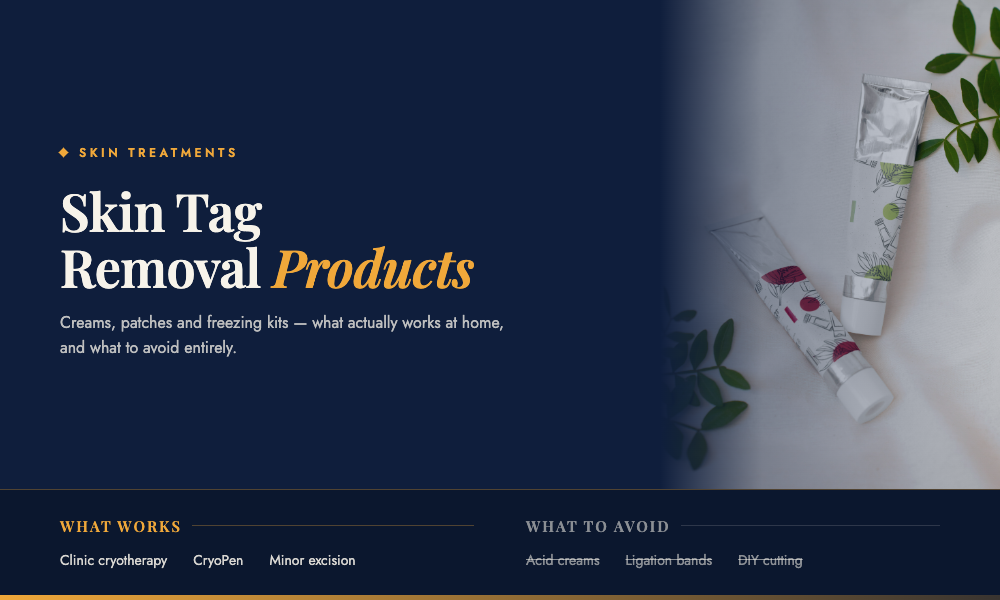
Skin tag removal products are creams, patches, bands and freeze kits sold to shrink or detach small, harmless skin growths at home. Some of these products can help with tiny tags, but evidence is limited for most, and results vary from person to person.
Before you buy anything, it helps to know exactly what you are treating. A growth that looks like a skin tag may be something else, and no home product can check that for you.
This guide explains how each product type works, when home use may be reasonable, and when a doctor should remove the tag instead.
Key Takeaways
- Skin tag removal products include creams, patches, bands and freeze kits
- Evidence for most skin tag removal products is limited, so results are never certain
- Never cut, pull or burn a skin tag yourself, and never treat large tags at home
- A doctor can confirm the growth is a skin tag and remove it in one short visit
What Are Skin Tag Removal Products?
A skin tag remover is any product sold to help people detach a skin tag without a clinic visit. UK pharmacies and online shops stock several types:
- Creams and liquid solutions that dry the tag out over time
- Adhesive patches that sit over the tag
- Band devices that squeeze the base of the tag
- Freeze sprays that chill the tag with a cold gas
These products are only suitable for small tags that a doctor or pharmacist has already confirmed are harmless. For larger growths, or any growth you're unsure about, a doctor-led skin lump removal clinic can assess and safely remove it in a single appointment.
What Causes Skin Tags?
Skin tags form when loose collagen fibres and small blood vessels become trapped inside a fold of skin. Friction plays a large part, which is why they favour skin creases.
Some people develop them for no clear reason, but they appear more often in:
- Older adults
- People who are overweight or living with obesity
- People with type 2 diabetes
- Pregnant women, likely due to hormone changes
- People whose close relatives also have skin tags
Signs and Symptoms of Skin Tags
A typical skin tag:
- Feels soft and smooth, and moves easily when you touch it
- Matches your skin colour or looks slightly darker
- Hangs from a narrow stalk rather than sitting flat
- Causes no pain unless clothing or jewellery rubs it
- May bleed or turn sore if it snags or twists

Is a Skin Tag Catching on Your Clothes or Jewellery?
- Consultant-led: Treated by a Consultant Plastic Surgeon
- One visit: Assessment and removal in the same appointment
- Diagnosis first: The growth is examined before removal
- Birmingham-based: Easy to reach across the West Midlands
Types of Skin Tag Removal Products
Home products fall into a few clear groups, and each works differently.
Skin Tag Removal Cream
A skin tag removal cream usually contains mild acids or plant extracts, such as tea tree oil, that dry the tag out with daily use. Support for these creams comes mostly from user reports rather than strong clinical studies. They can also irritate the healthy skin around the tag, so apply them with care and stop if the area turns red or sore.
Skin Tag Patches
Skin Tag Patches have adhesive that is applied to the skin and continuously releases drying agents throughout the day. Some merely cover the tag, depending on how much friction it has. As with the cream, little to no scientific evidence supports their use, since most skin tags do not change after prolonged use.
Skin Tag Removal Kits
A skin tag removal kit consists of small bands and an applicator. The band wraps around the stalk, constricting its blood flow until it turns black and falls off within a few days. This process is called ligation, and the kits can be used only on skin tags whose stalks fall within the manufacturer's specified dimensions.
Home Freeze Sprays
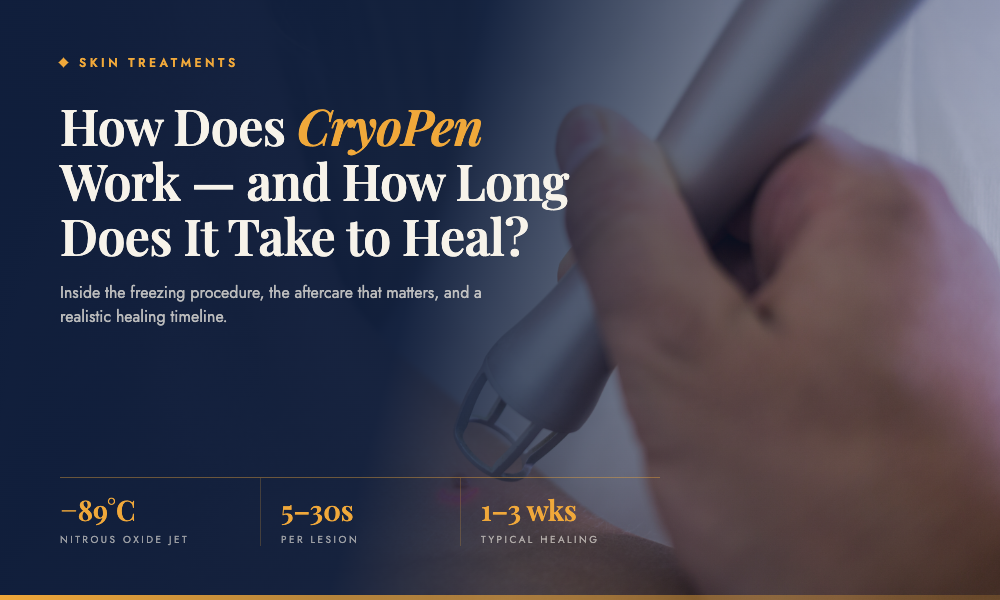
Freeze sprays cool the tag with a cold gas that operates on the same principles as clinical cryotherapy, although the temperature used is not nearly as low. However, because they are less effective, small tags may require multiple applications, and careless use could cause blisters.
Plasma Pens and Similar Devices
Plasma pens and heating devices are skin tag removal kits available online. Skincare specialists should not use these. They can cause burning and scarring.
How Do Skin Tag Removal Products Work?
Each product type targets the tag in one of three ways:
- Drying agents: Creams and patches break down the tag's tissue gradually until it shrinks or falls away.
- Ligation: Bands cut off the blood supply, causing the tissue to die and the tag to detach.
- Freezing: Cold gas damages the cells inside the tag, causing it to fall off as the skin heals.
Clinic treatments use the same principles with stronger tools, greater precision and a doctor's judgement behind every step. That difference explains why professional removal works in one visit, while skin tag removal products often take weeks, if they work at all.
How to Remove Skin Tags at Home: Is It Safe?
If you search for how to remove skin tags at home, the honest answer is simple. Only consider it for a small tag that a doctor or pharmacist has confirmed is harmless, and only with a regulated product used exactly as instructed.
UK health guidance says you should speak to a GP before removing any skin tag, and you should never remove large tags yourself because they can bleed heavily. Whatever you do, never:
- Cut or snip a tag with scissors or nail clippers
- Pull, pick or twist a tag off
- Burn a tag or use an unregulated heat device
- Tie thread around a tag near the eyes or in sensitive areas
- Keep using a product that makes the skin red, sore or broken
Some skin tags also fall off naturally when the stalk twists and the blood supply is cut off, so patience sometimes solves the problem on its own.
Tried Home Products Without Success?
- Proper check: A doctor confirms it is a skin tag
- Right method: Freezing, shave excision or minor surgery
- Lower risk: Sterile tools and controlled bleeding
- Clear aftercare: You know what to watch for
Professional Skin Tag Removal Options
Doctors remove skin tags quickly, using a numbing treatment where needed. Common clinic methods include:
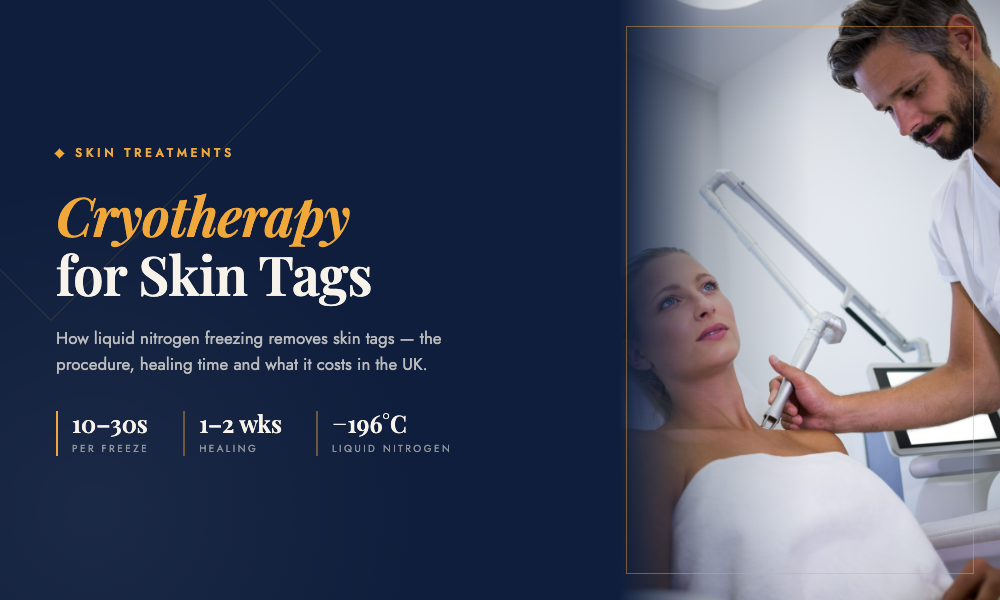
- Cryotherapy: Liquid nitrogen freezes the tag, which falls away over the following days
- Shave excision: The tag is removed using a fine blade at skin level
- Curettage and cautery: The tag is scraped off, and the base is burned using heat to reduce the risk of bleeding
- Surgical excision: Tags larger than a grain of rice are removed using fine stitches when necessary
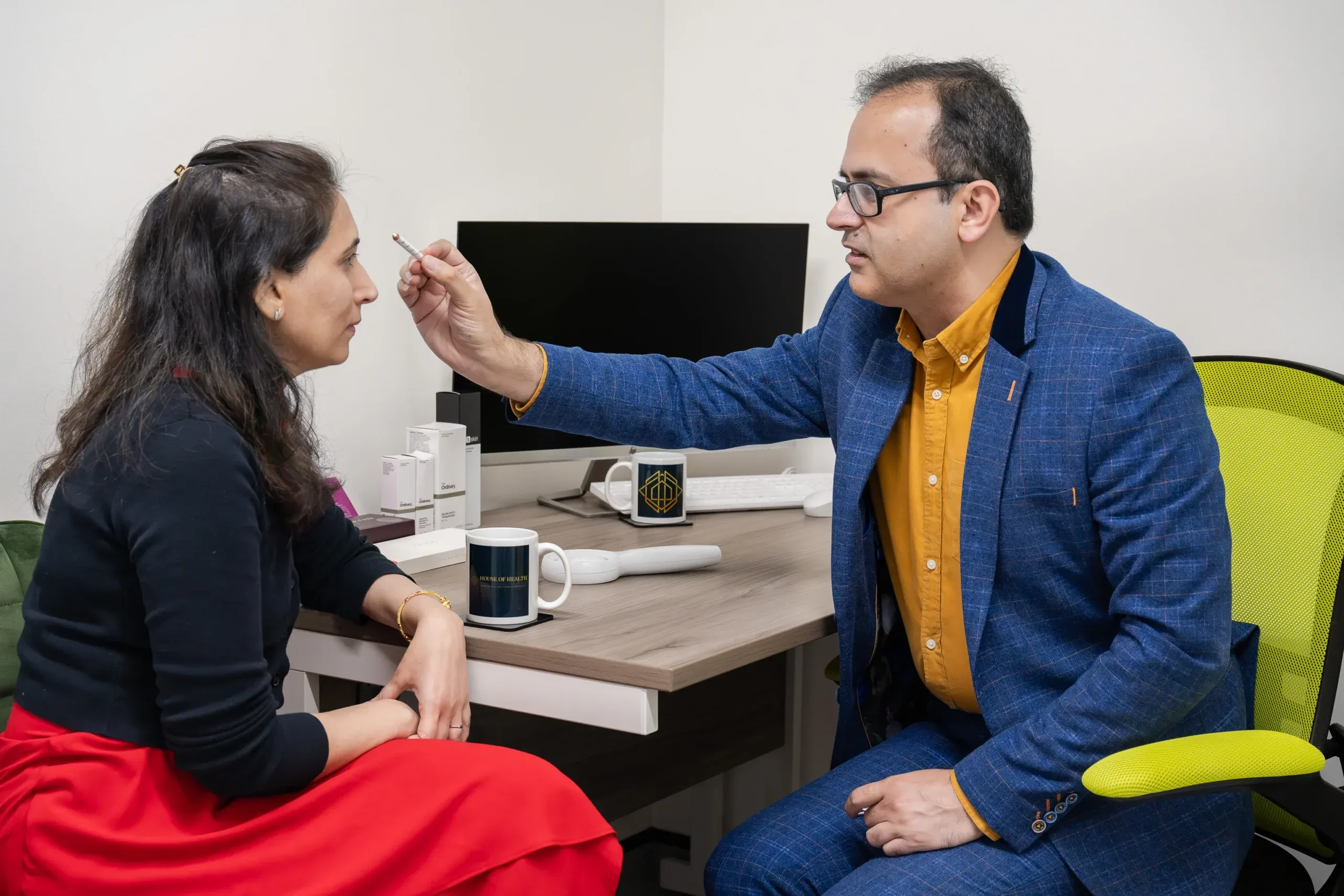
Every professional skin tag removal begins with an examination. The physician examines the growth with a dermatoscope to ensure it is actually a skin tag before treatment. No home remedy offers this level of security.
Professional skin tag removal also carries risks. These include bleeding, scarring, and, rarely, infection.
Risks and Considerations of Home Removal
Skin tag removal products carry risks that go beyond simply failing to work:
- Incorrect diagnosis: Skin growth mistaken for a skin tag could actually be a mole
- Delayed diagnosis: The incorrect diagnosis of the growth can result in the concealment of important changes to be observed by a doctor
- Irritation and burns: Products such as creams and cold sprays may irritate and even burn healthy tissue near the tag
- Bleeding: Ligatures on large and stalk-like skin tags may lead to serious bleeding
- Infection: Any wound is an entry point for bacteria
- Scarring or discolouration: Strong products may cause permanent damage to skin tissue
Avoid using any home product on the eyelids or close to the eyes. The skin there is thin and delicate, and a slip can cause serious harm.
When to See a Doctor About a Skin Tag
Book a medical review rather than reaching for a product if:
- The growth changes colour, size or shape
- It bleeds without being snagged
- It feels firm or does not move freely when touched
- It causes pain
- Several new growths appear over a short time
- It sits on an eyelid or in a sensitive area
- A home product has caused redness, soreness or broken skin
A private GP appointment is a simple first step if you are unsure what the growth is or how to deal with it.
Conclusion
Although creams, patches, bands, and freeze sprays may help remove some types of skin tags, nothing beats clinically supervised procedures for effectiveness and speed. Most methods lack a scientific basis, and none account for the tag's growth stage.
If a tag bothers you because it catches, rubs, or bleeds, a short clinic visit can address it safely and usually in a single appointment.
For anyone in the West Midlands, the Skin Lump Removal Clinic in Birmingham at House of Health checks and treats skin growths in the same visit where suitable. A Consultant Plastic Surgeon leads the service.
Frequently Asked Questions
Do skin tag removal products work?
Occasionally. Band kits make the most sense for small, narrow-stalked tags, since depriving the cells of blood supply will cause detachment. The effectiveness of creams, patches, and freeze sprays is questionable, and many tags do not respond to any treatment.
What are the best skin tag removal products?
No product has been shown to work better than the others. Band products are better suited to tiny tags with stalks, whereas creams and patches lack sufficient evidence of effectiveness. The surest way isn't a product; it's medical removal.
Can you cut off a skin tag at home?
No. Cutting a tag with scissors or clippers risks heavy bleeding, infection and scarring, and large tags bleed far more than people expect. Doctors use sterile instruments and control bleeding as they work.
Do skin tags grow back after removal?
A fully removed skin tag does not usually grow back in the same spot. New tags can still form nearby, though, especially in skin folds where friction continues.
Are skin tag removal products safe to use on the face?
Be careful. Avoid your eyelids and the surrounding area, since the skin there is delicate and can be easily damaged. For facial marks, a doctor can remove them with less scarring.
When should you see a doctor about a skin tag?
See a doctor if the growth changes, bleeds, hurts or feels firm, and whenever you are not certain it is a skin tag. The same applies to any growth near the eyes or in a sensitive area. A doctor can confirm the diagnosis and remove the tag safely in one visit.