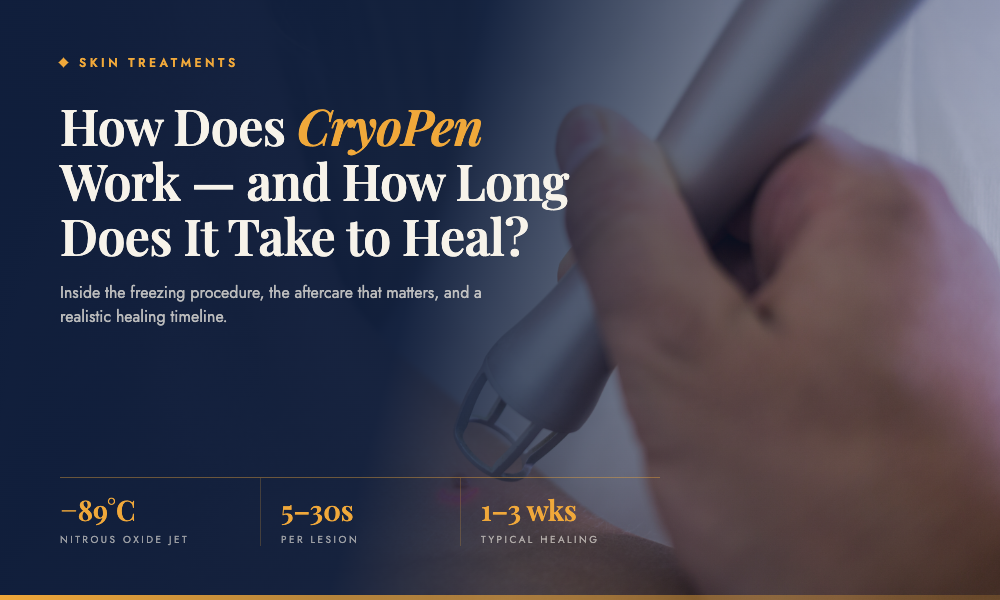
CryoPen uses a fine jet of nitrous oxide to freeze a skin lesion at approximately -89°C. The cold turns the fluid inside the cells to ice. The cell walls break, and the lesion dies off. Most treated spots on the face heal within one to two weeks, while deeper or lower sites can take up to six weeks.
Private clinics across the UK use CryoPen to clear skin tags, warts and age spots, because the NHS rarely removes benign lesions. This guide explains each step of the treatment. It also covers the healing stages day by day, so you know what is normal and when your skin should look clear again.
Key Takeaways
- CryoPen freezes a skin lesion with a precise jet of nitrous oxide in five to thirty seconds.
- Most treated spots scab over and clear within one to two weeks on the face.
- Full skin recovery takes two to six weeks, and colour can take up to three months to settle.
- There is no downtime, though the spot needs gentle care until the scab falls away.
How Does CryoPen Work on Skin Lesions?
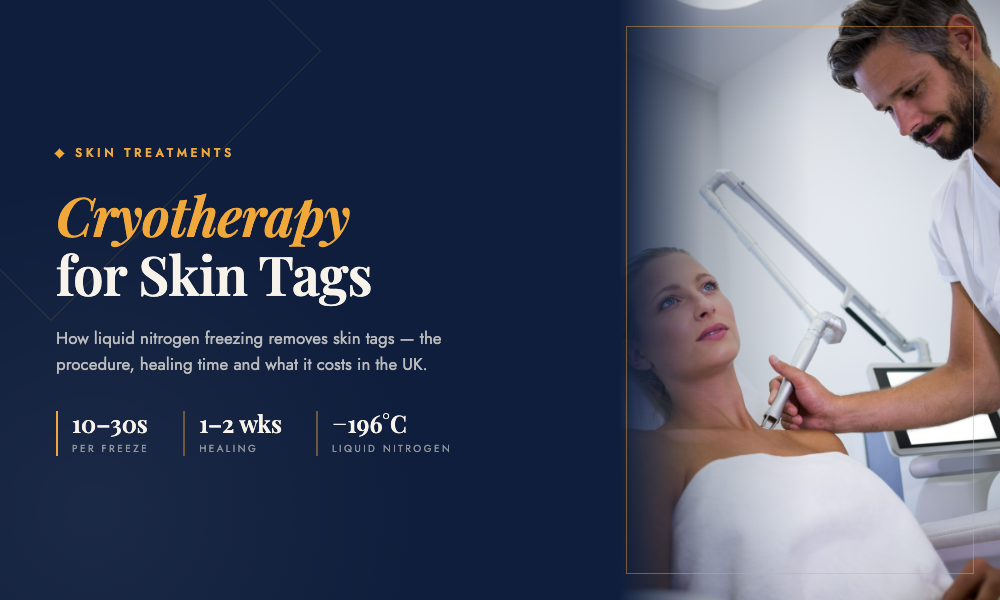
CryoPen is a cryotherapy device. It sends a narrow stream of nitrous oxide gas onto the skin at close to minus 89 degrees Celsius. The tip is accurate to a millimetre. Only the lesion freezes. The healthy skin around it stays safe.
The extreme cold turns the fluid inside each cell to ice. Sharp ice crystals form and the cell walls rupture. The treated tissue then breaks down over the following days. Your body clears it away, and fresh skin grows in its place.
CryoPen suits benign lesions only. Common examples include:
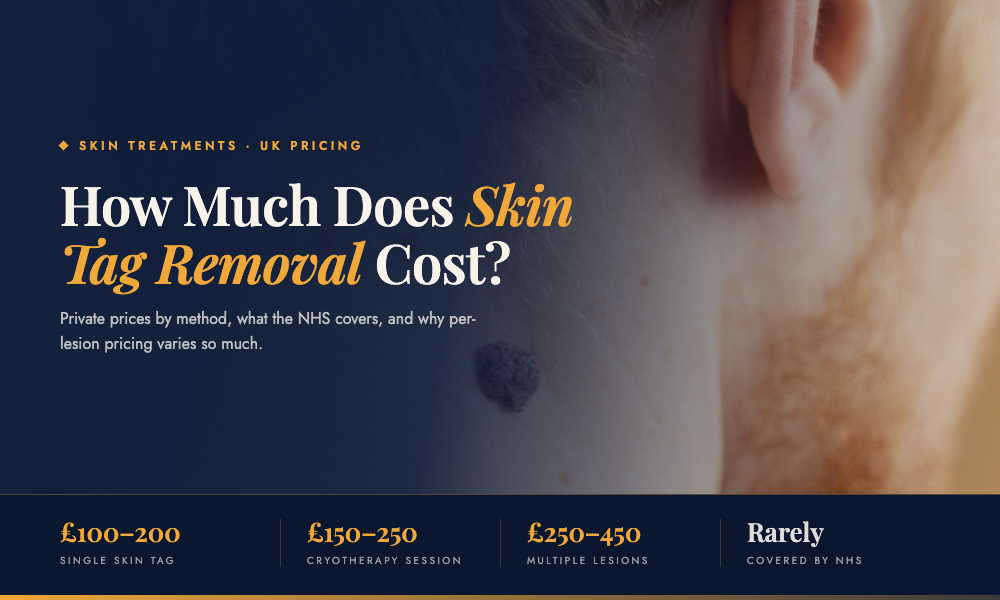
- Skin tags
- Warts and verrucas
- Cherry angiomas
- Age spots and flat pigment marks
- Milia
A doctor should always check your lesion first. Most marks are harmless, but some skin changes need a medical opinion before any treatment.
Read More: Skin Lesion Removal
What Happens During a CryoPen Session?
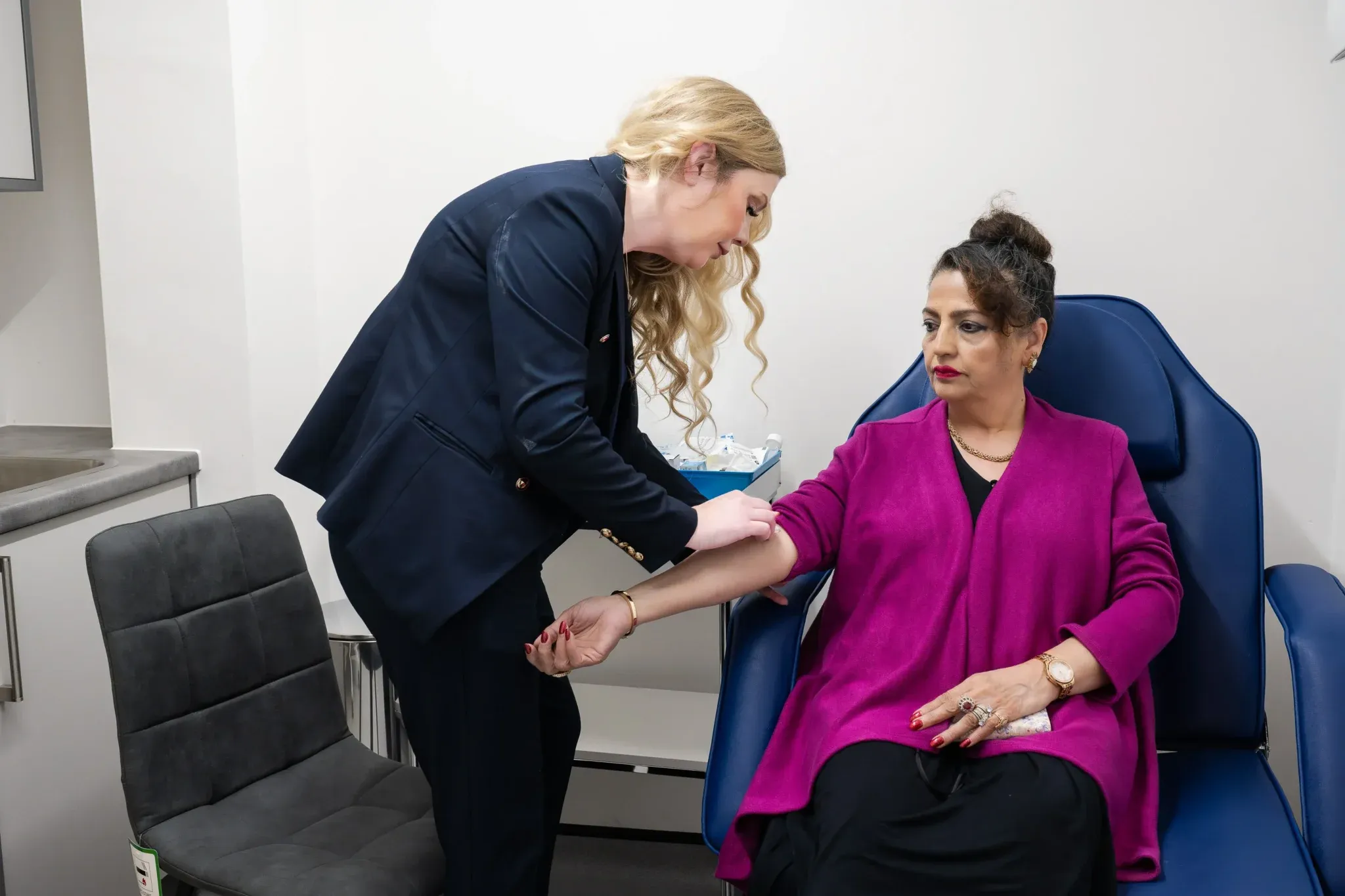
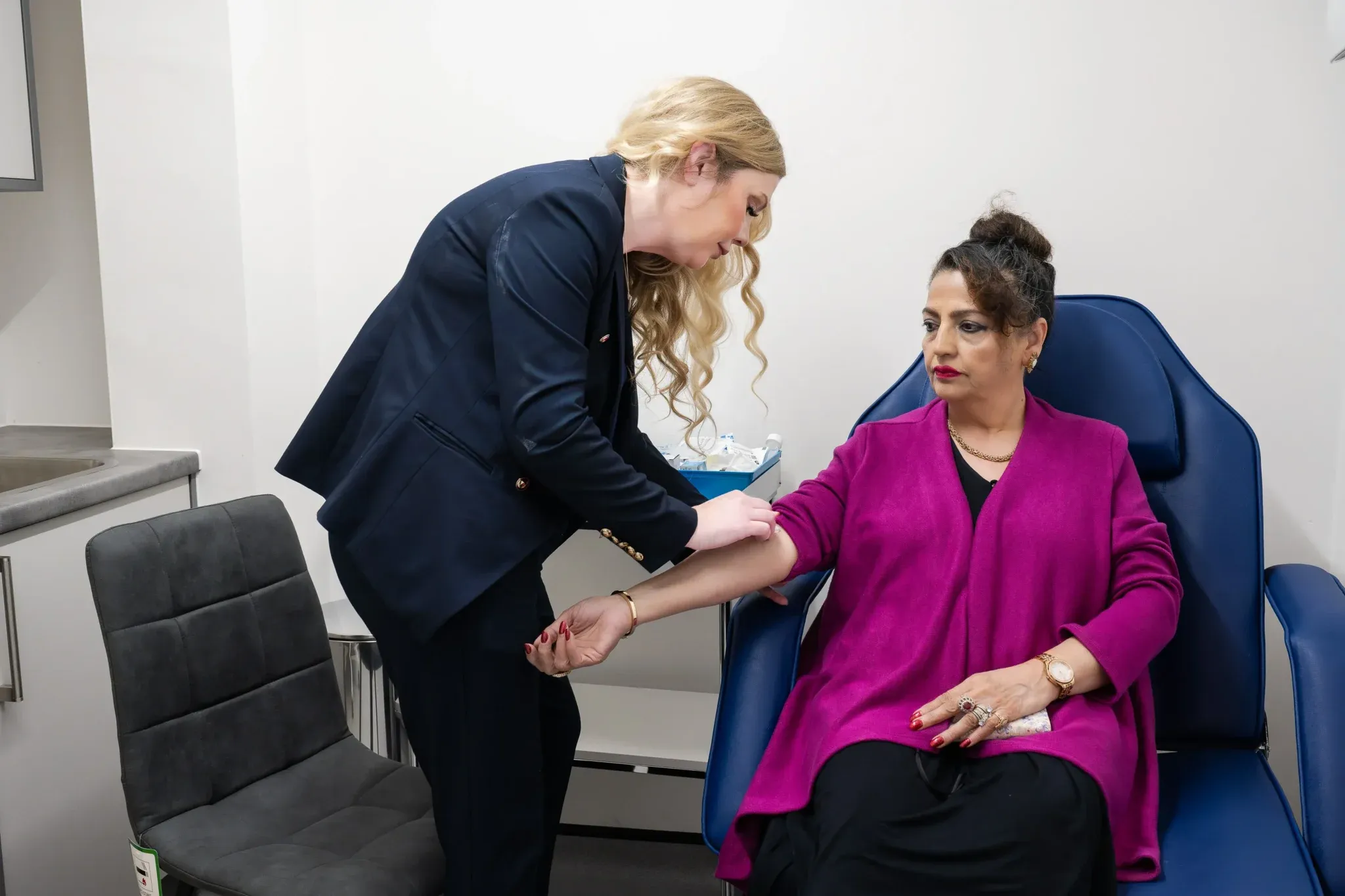
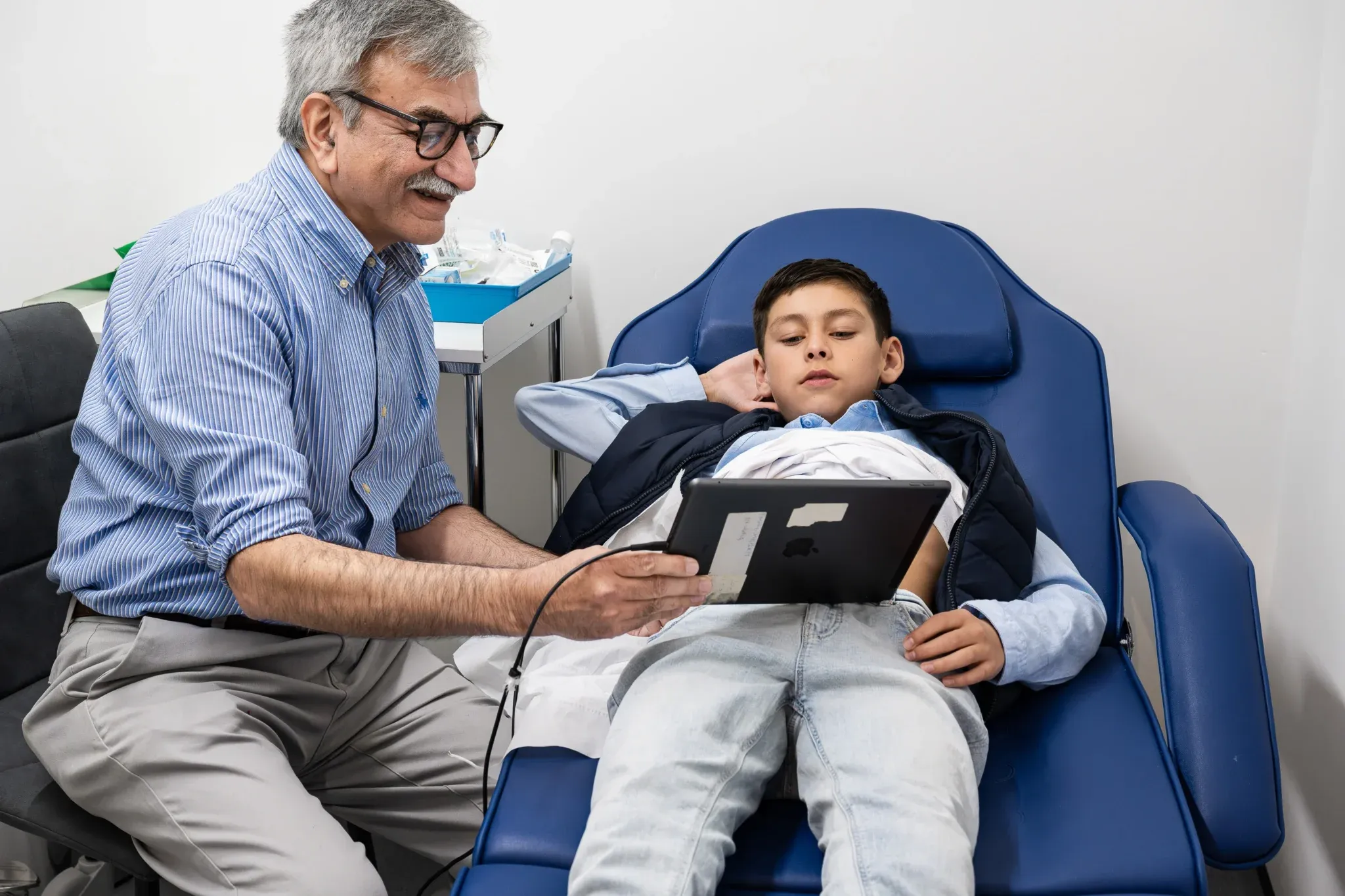
Your appointment starts with a short assessment. The clinician examines the lesion, confirms it is benign, and explains the plan. There is no need for an anaesthetic in most cases.
The treatment itself is quick:
- The clinician holds the pen a few millimetres from the lesion.
- A burst of nitrous oxide freezes the spot for five to thirty seconds. The skin turns white.
- The area thaws and flushes red.
- Deeper lesions often receive a second freeze after thawing.
Most sessions last ten to fifteen minutes from start to finish. A small lesion takes seconds to treat. You can drive home straight after.
Is CryoPen Painful?
Most people say no. You feel a cold sting as the gas hits your skin, a bit like a nettle sting. It fades within minutes. The spot can itch for around ten minutes afterwards, which is a normal histamine response.
Some people notice an ache like mild sunburn for a few hours. Simple pain relief from the chemist is enough if you need anything at all.

Fed Up With a Skin Tag or Wart That Catches Every Single Day?
How Long Does CryoPen Take to Heal?
Most CryoPen-treated areas on the face heal within 1 to 2 weeks. The scab lifts away on its own and new skin sits underneath. Full recovery takes two to six weeks. Any colour change can take up to three months to fade.
The exact time depends on where the lesion sits and how deep the freeze went. As a guide:
- Face and neck: scab clears in 1 to 2 weeks, full recovery in 2 to 4 weeks.
- Chest, back and arms: scab clears in 2 to 3 weeks, full recovery in 4 to 6 weeks.
- Hands and lower legs: scab clears in 3 to 4 weeks, full recovery in 6 weeks or more.
Blood supply explains the gap. The face heals fast because it has a rich supply. The lower legs are the slowest of all. Friction from clothing or shoes can also slow the repair process, so spots on the waist or feet need extra care.
CryoPen Healing Stages: What Happens Day by Day
Your skin moves through a set pattern after cryotherapy. Here is what to expect:
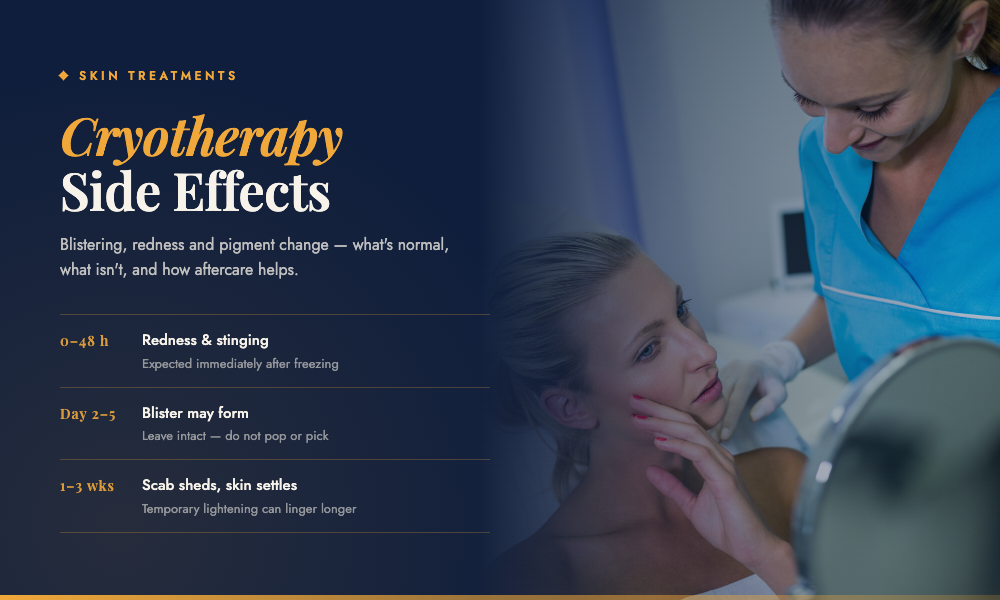
- Straight after: the spot goes white, then turns red as it warms up. It can look a bit raised, like a bee sting.
- First few hours: mild warmth and an itch are common. A small blister can form within two to four hours. Leave it alone. It protects the new skin below.
- Days one to three: any blister flattens and dries. The lesion turns darker. This colour change is a normal sign that the freeze has worked.
- Days three to five: a crust or scab forms over the spot.
- Weeks one to two: the scab lifts and falls off on its own. Fresh pink skin sits underneath.
- Weeks two to six: the new skin strengthens, and the pink tone softens.
- Within 3 months: the colour blends back to match the rest of your skin.
Do not pick the scab at any stage. Early removal is the main cause of marks after cryotherapy.
How Long Does CryoPen Take to Work?
The freeze destroys the lesion on the day. The visible result takes a little longer. Most small lesions darken, crust and drop off within one to three weeks.
Many small spots clear after a single session. Larger or deeper lesions may need a second visit. Warts and verrucas are the most stubborn, because the virus sits deep in the skin. Clinics usually review the area after two to four weeks and repeat the freeze if any tissue remains.
Worried About Blisters, Scabs or Marks While Your Skin Heals?
Do You Need Downtime After CryoPen?
No. CryoPen recovery does not stop your day. You can return to work, drive and shower as normal. The area remains uncovered in most cases, unless it rubs against clothes.
A few limits apply in the first two to three days. Skip saunas and very hot baths. Hard exercise can wait 48 hours, because heat and sweat can irritate the treated spot.
CryoPen Aftercare Tips to Help Your Skin Heal
Good aftercare protects the result. Follow these steps until the skin looks settled:
- Wash the area with mild soap and water, then pat it dry.
- Leave any blister intact. If one bursts on its own, apply a thin layer of antiseptic cream.
- Use sun cream with SPF 30 or higher on the spot for at least three months, because new skin marks with ease.
- Do not touch the scab with your nails or a razor.
- A simple plaster helps if the spot rubs on a waistband or a shoe.
- Moisturise gently once the scab has gone.
Contact your clinic if the area grows more painful over time or leaks thick yellow fluid. Infection is rare after cryotherapy, but it needs a quick check.
Conclusion
CryoPen works through a precise freeze. Nitrous oxide destroys the cells inside a benign lesion in seconds, and the body clears the dead tissue over the weeks that follow. Most spots on the face heal within one to two weeks. Deeper or lower sites can take up to six weeks, with full colour back within three months.
The right care makes the difference between a clean result and a mark. If a skin tag or a stubborn wart bothers you, the team at House of Health in Birmingham can assess it and talk you through CryoPen treatment. One short visit is often all it takes.
Frequently Asked Questions
Can I shower after CryoPen treatment?
Yes. Showers are fine from day one. Keep the water warm, not hot. Pat the area dry after. Do not soak in the bath if there is a blister.
Does CryoPen leave a scar?
True scars are rare because the skin is never cut. The bigger risk is a colour change, which usually fades over a few months. Leave the scab alone to keep that risk low.
How many CryoPen sessions will I need?
Many small lesions clear after one session. Thicker spots, such as verrucas, may require two or three visits, spaced a few weeks apart.
What should you avoid after CryoPen?
Avoid heat, strong sun, and any products that scrub the area. Do not pick the scab or pop a blister. Both slow the repair and raise the risk of a mark.
Can I wear makeup after CryoPen on my face?
Wait until the scab has fallen away. Applying makeup over a fresh scab can cause it to break off early and trap bacteria in the area.
Why has my skin gone darker after CryoPen?
A darker patch is part of the normal process. The treated tissue dries out before it sheds. If the deeper colour stays past three months, ask your clinician to review it.