
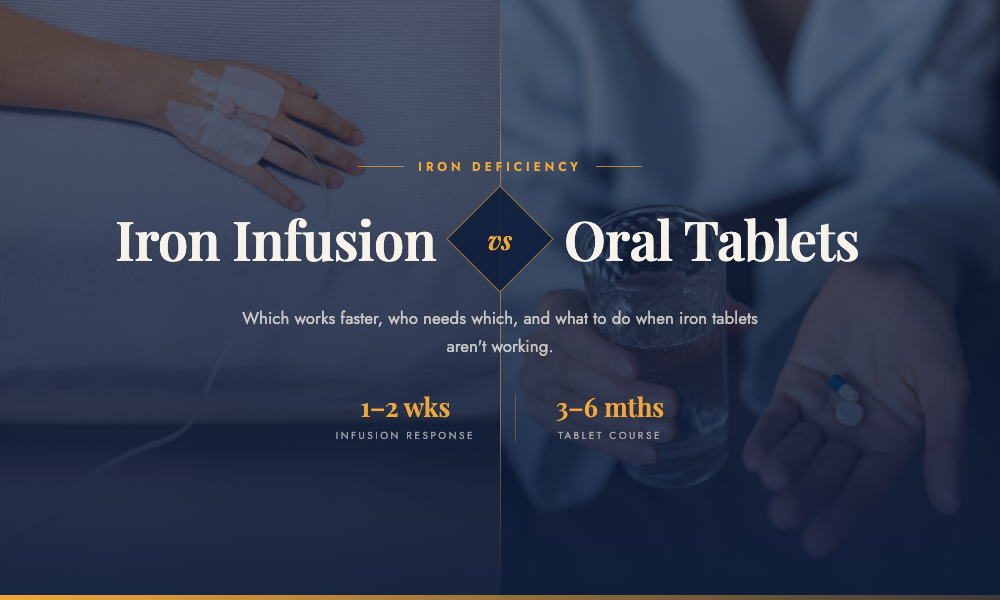
The main difference between an iron infusion and oral is how the iron reaches your body. Tablets top up your iron slowly through your gut over several months, while an infusion delivers iron straight into your bloodstream during a single clinic visit. Doctors usually start with tablets first. They then suggest an infusion when tablets fail, cause side effects, or when iron levels need to rise quickly.
Both options treat iron deficiency and iron deficiency anaemia, two of the most common blood problems in the UK. This guide compares the two treatments in plain English. It explains how each one works, how fast results appear, what side effects to expect, and the signs that point towards one option over the other.
Key Takeaways
- Oral iron tablets are often used initially to treat mild iron deficiency. In cases of iron deficiency, iron tablets will take about two to three months to replenish your iron stores.
- Iron infusion is much faster at restoring your iron levels and can be a good choice if your iron tablets do not suit you.
- Usually, people feel more energetic within 1 to 2 weeks after an iron infusion.
- First, there will be a blood test, and then a doctor will choose the best treatment approach.
IV Iron vs Oral Iron: What Is the Difference?
The choice between IV iron and oral iron will depend on the speed, efficiency, and supervision. Oral iron is cheap, can be taken at home, and works very effectively, provided that the patient's system can absorb it. IV iron does not pass through the digestive tract; therefore, the full dose enters the body immediately.
When doctors weigh up an iron infusion vs oral iron, they look at three things: how low your levels are, how urgently they must rise, and how well you coped with tablets before.
What Are Oral Iron Tablets?
Oral iron supplements are those pills that are swallowed either daily or once every two days. Oral iron supplements of low strength can be bought from any drugstore, but stronger iron tablets have to be prescribed by a general practitioner following a blood test.
What Is an Iron Infusion?
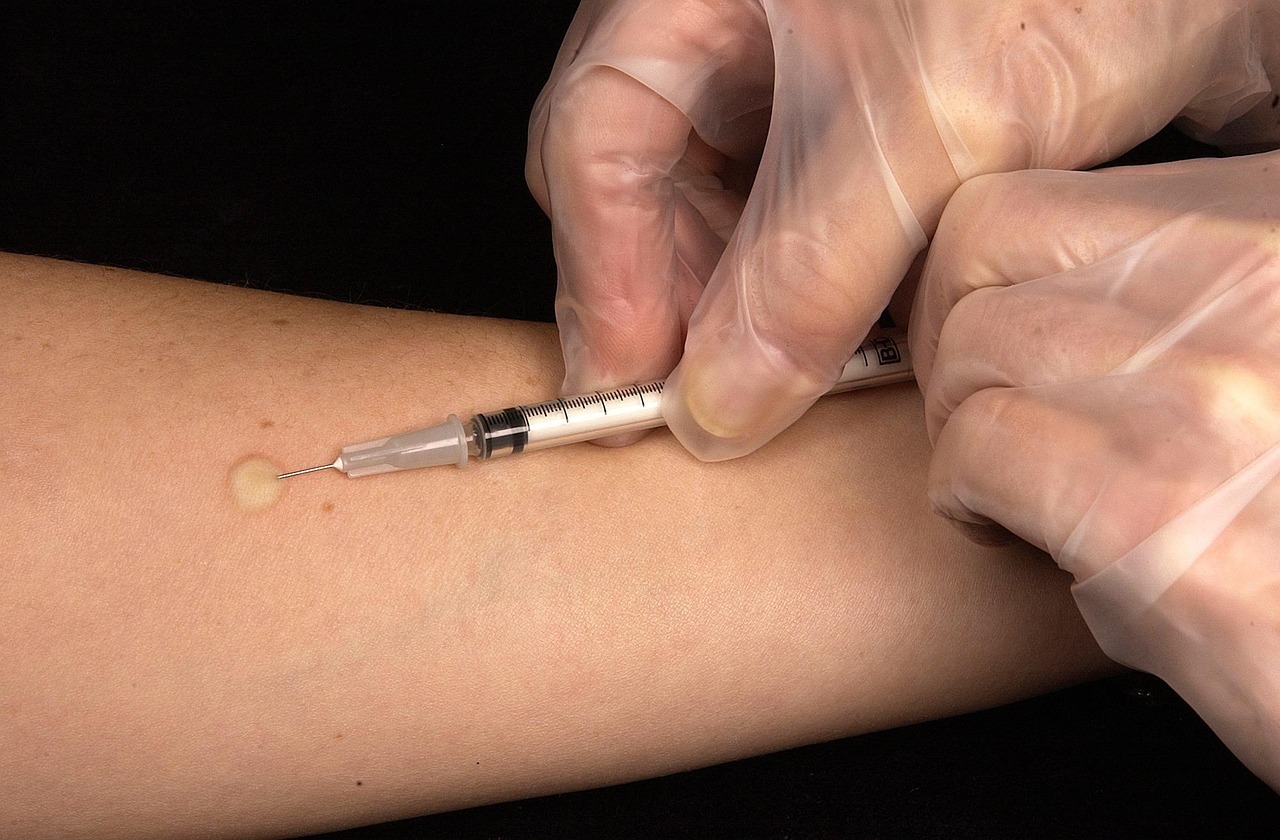
An iron infusion is a treatment administered in a clinic or hospital. A nurse or doctor places a small tube, called a cannula, into a vein in your arm. Liquid iron then drips into your bloodstream over 15 to 60 minutes. People often search for "iron injection" rather than "tablets," but UK clinics typically give iron as a slow drip rather than a quick jab, so "infusion" is the correct term.
Causes of Iron Deficiency
Low iron rarely appears without a reason. The most frequent causes include:
- Heavy periods or blood loss during childbirth
- A diet low in iron-rich foods, which is common with vegan and vegetarian eating patterns
- Pregnancy, because the body needs extra iron for the growing baby
- Slow, hidden bleeding from the stomach or bowel
- Long-term use of some acid-reducing medicines or anti-inflammatory painkillers
Many of these causes lie within the digestive system, so unexplained iron deficiency often requires a specialist review. A consultant-led gastroenterology clinic in Birmingham can investigate the root cause using blood tests, stool tests, scans, and, where needed, referrals for endoscopy.

Tired All the Time and No Clear Answer?
Symptoms of Low Iron Levels
Iron deficiency develops slowly, so many people blame stress or a busy routine. Watch for these signs:
- Constant tiredness that sleep does not fix
- Pale skin, pale inner eyelids, or dark circles under the eyes
- Shortness of breath when climbing stairs
- Headaches, dizziness, or feeling cold all the time
- Brittle nails, hair shedding, or cracks at the corners of the mouth
- Restless legs at night or unusual cravings, such as chewing ice
A simple blood test can confirm whether low iron levels are behind these symptoms. Booking health checks in Birmingham that include iron and ferritin levels gives you a clear answer instead of guesswork.
How Each Treatment Works
How Iron Tablets Work
Iron tablets are absorbed in the stomach and small intestine. The body absorbs only a tiny proportion of each dose, and thereafter it slowly replenishes itself. This is why even when iron levels return to normal, medication is continued for 3 months. Absorption can be increased by taking tablets with sources of Vitamin C, such as orange juice.
How an Iron Infusion Works
The infusion is a method that bypasses the digestive system and delivers iron directly into your bloodstream. The amount of iron required for replenishment is calculated by the doctor based on your weight and blood analysis, and is then administered either once or in two stages. The clinical team will keep watch on you during the infusion process and even 30 minutes afterwards.
How Quickly Does an Iron Infusion Work?
How fast does your body absorb the iron infusion compared to pills? Within days, your body begins to absorb the iron from the infusion. In most cases, patients feel more energetic after one or two weeks, and when you take a blood test after about four weeks, you will notice an increase in your haemoglobin level.
Tablets run on a slower clock. Blood counts often begin to improve after three to four weeks, but fully replenishing your iron stores can take three to six months of steady use.
When Is an Iron Infusion Needed?
So, when is an iron infusion needed instead of tablets? UK doctors usually recommend one in these situations:
- Tablets have not raised your levels after two to three months of correct use
- Tablets cause side effects you cannot manage, such as sickness or severe constipation
- A gut condition, such as coeliac disease or IBD, stops iron from being absorbed
- Iron must rise quickly, for example before planned surgery or in later pregnancy
- Ongoing blood loss outpaces what tablets can replace
- A specialist advises IV iron as part of care for kidney or heart conditions
If you keep searching for reasons your iron tablets aren't working, poor absorption is the most common explanation. Even the correct dose cannot help if your gut cannot absorb the iron. An infusion simply moves the iron past that blockage.
Months of Tablets and Still Exhausted?
Iron Infusion vs Tablets: A Side-by-Side Comparison
Here is a quick comparison of iron tablets vs iron infusion across the key factors:
- How you take it: tablets are swallowed at home daily or on alternate days; an infusion is given through a drip in a clinic or hospital.
- Speed of results: tablets work gradually over weeks to months; an infusion is faster, often noticeable within one to two weeks.
- Course length: tablets typically run for three to six months or longer; an infusion usually requires one or two sessions.
- Stomach side effects: tablets commonly cause constipation and sickness; an infusion avoids these because the gut is bypassed.
- Supervision: tablets are taken at home with GP or pharmacist advice; an infusion involves medical monitoring during and after treatment.
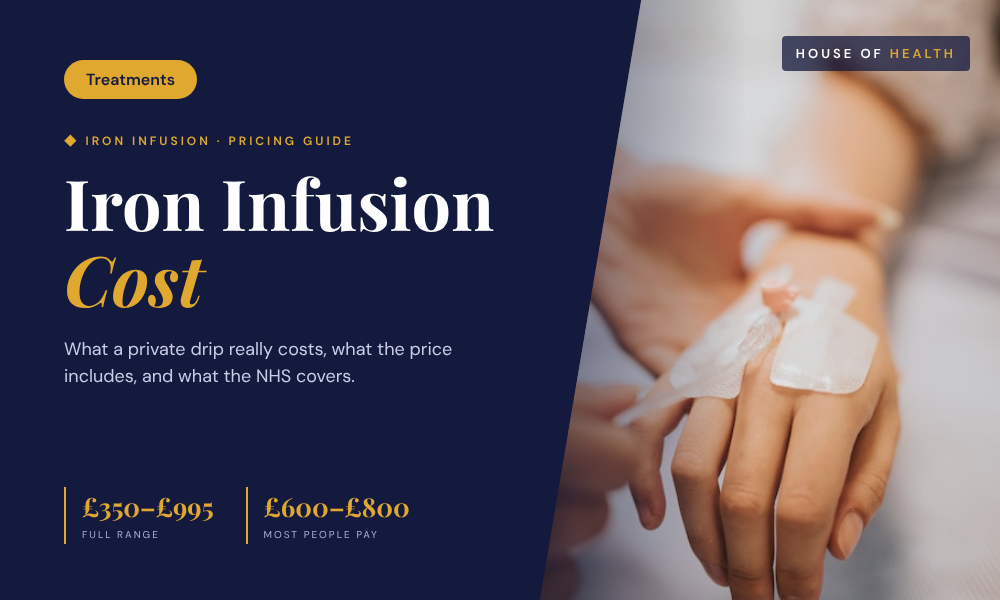
- Typical UK cost: tablets are low cost, often a few pounds a month; infusions are higher, with private clinics often charging several hundred pounds.
- Best suited for: tablets suit mild deficiency with a healthy gut; an infusion suits failed tablets, poor absorption, or an urgent need.
Costs vary between clinics and depend on the dose you need, so always confirm the price before booking.
Side Effects and Safety
Both treatments have a long track record and are considered safe when supervised by a doctor. Each still carries possible side effects worth knowing about.
Oral Iron Side Effects
- Constipation or occasionally diarrhoea
- Feeling sick, particularly when hungry
- Cramping and swelling of the stomach area
- Black, or very dark coloured stools, which appear frightening but are not dangerous
- Metallic taste in the mouth
IV Iron Side Effects
- Headache, flushing, or mild muscle and joint aches for a day or two
- A temporary change in taste
- Bruising or irritation where the cannula sat
- A long-lasting brown stain on the skin if the drip leaks outside the vein, which is rare
- Allergic reactions, which are uncommon but can be quite serious; hence, your progress is constantly monitored by qualified personnel.
Notify the clinical staff of any allergic reactions, asthma, pregnancy or kidney complications before being administered treatment. Never consume iron tablets until after you have taken a blood test.
Which Option Should You Choose?
There is no definitive winner in this battle between iron infusions and iron tablets. Iron tablets will always be the logical choice for a person with mild iron deficiency and a well-functioning digestive tract. The decision to opt for an infusion is made when tablets are not working or when levels need a quick boost.
Iron infusion, as well as iron tablets, requires a correct medical approach. The pharmacy or GP will choose oral iron treatment, but an infusion is always prescribed and administered by the doctor who carries out blood tests and finds the need for an infusion.
Conclusion
Compared with iron infusions and tablets, iron tablets are best suited for mild iron deficiency, as their effects are gradual and take several months to take effect. However, iron infusions are effective in cases of tablet failure or discomfort, or poor iron absorption.
The doctors at House of Health in Birmingham provide a complete iron care pathway, from testing through to specialist-led treatment. You can book a private anaemia test in Birmingham to check your full iron profile, and the clinical team will then guide you towards the right treatment for your results.
Frequently Asked Questions
How long does an iron infusion take?
Most infusions last 15 to 60 minutes, followed by about 30 minutes of observation. You should plan for the whole visit to take under two hours.
How many iron infusions will I need?
Most people need one or two sessions. The doctor calculates your total dose based on your weight and blood results, then rechecks your levels about 4 weeks later.
Can I eat and drink before an iron infusion?
Yes. You can usually eat and drink normally before and after the appointment, because no fasting is needed. Always follow the specific advice your clinic gives you.
Should I keep taking iron tablets after an infusion?
Usually not straight away. The gut absorbs very little oral iron in the weeks after an infusion, so your doctor will tell you when, or if, to restart tablets.
Does an iron infusion hurt?
You feel a small scratch when the cannula goes in, and most people feel little or nothing while the drip runs. Tell the team straight away if you notice burning or swelling at the site, as this can mean the drip has leaked.
Can I drive home after an iron infusion?
Most people feel well enough to drive and return to normal activities the same day. If you feel dizzy or unwell, tell the clinical team and wait until it passes.