
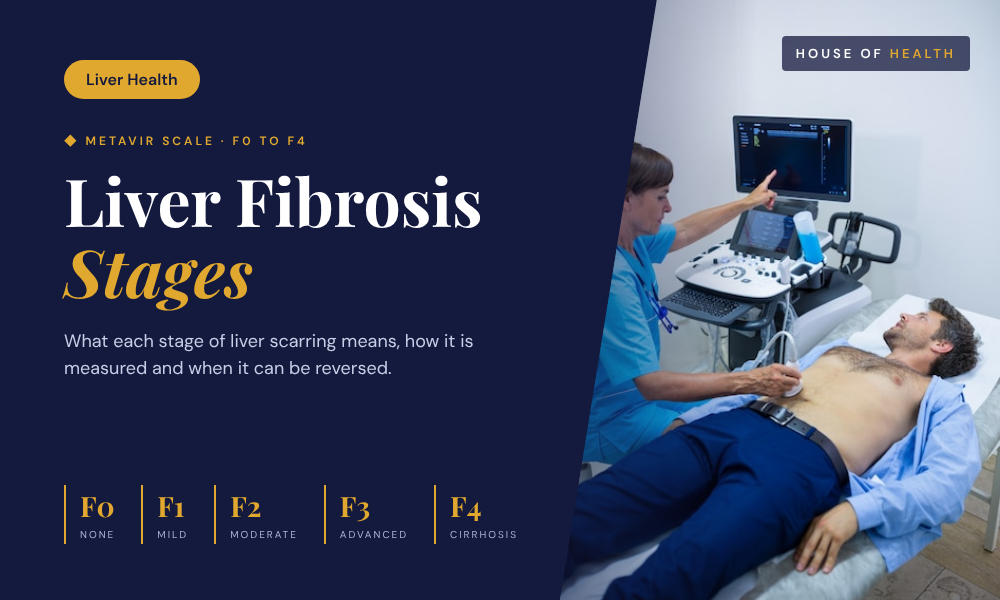
If you have seen a result such as 'F2' on a scan report, you will want to know what it means. Liver fibrosis is scarring of the liver, and doctors describe it in stages from F0 (no scarring) to F4 (cirrhosis) to show how much scarring there is and how urgently it needs attention.
Fibrosis is often silent, but it is not always permanent. If found early and the cause is treated, the liver can stop scarring and may even repair some damage. This guide explains the liver fibrosis stages in simple terms, how they are measured and what to do next.
Key takeaways
- Liver fibrosis is scar tissue caused by ongoing liver damage, such as fatty liver disease, alcohol or viral hepatitis.
- It is usually staged from F0 (no fibrosis) to F4 (cirrhosis) using the METAVIR scale.
- Most people have no symptoms until the later stages, so testing matters.
- Doctors estimate the stage by combining blood tests, scores such as FIB-4 or ELF, a liver stiffness scan, and sometimes a biopsy.
- Earlier stages can often be stopped or improved by treating the cause.
What is liver fibrosis?
Your liver is very good at repairing itself. When cells are damaged, it uses a protein called collagen as temporary scaffolding, which is cleared away once the repair is done. When the damage keeps happening, for example with long-term inflammation, the collagen is not removed. Instead, it builds up, and that build-up is fibrosis. Liver UK (formerly the British Liver Trust) describes a healthy liver as soft, but it becomes harder and bumpier as scarring builds up.
Even with fibrosis, the liver can usually keep doing its normal jobs, which is why many people feel well. Over time, though, scar tissue can replace healthy cells and make it harder for blood to flow through the liver.
The stages of liver fibrosis (F0 to F4)
The most widely used way to describe liver fibrosis stages is the METAVIR scale. It was developed for liver biopsy samples, but doctors now use the same F0 to F4 language for scan results and blood scores too.
| Stage | What it means |
|---|---|
| F0 | No fibrosis |
| F1 | Portal fibrosis without septa |
| F2 | Portal fibrosis with a few septa |
| F3 | Numerous septa without cirrhosis |
| F4 | Cirrhosis |
'Septa' are bands of scar tissue. As fibrosis progresses, these bands start to link different parts of the liver together, which is why F3 is sometimes called bridging fibrosis.
F0: no fibrosis
There is no scarring. You may still have a liver condition, such as fat in the liver (steatosis), but it has not yet caused scar tissue. Liver UK notes that most people with fatty liver disease are at fibrosis stage 0, and that this stage can be fully reversed.
F1: mild fibrosis
A small amount of scarring has formed around the portal areas, the parts of the liver where blood vessels and bile ducts enter. The liver's overall structure is preserved, and it works normally. Lifestyle changes and treating the cause can often reverse inflammation at this stage.
F2: moderate fibrosis
Scarring has started to extend out in a few bands. F2 or above is generally described as significant fibrosis, because this is where the risk of further progression becomes more important. The liver usually still works well, and much of the damage can be repaired if the cause is controlled.
F3: advanced fibrosis
Many bands of scar tissue now bridge across the liver, but it has not yet reached cirrhosis. The liver usually still functions well, and most people have no symptoms. F3 is a critical point: according to Liver UK, most of the damage can still be repaired, but further scarring could lead to cirrhosis. People with advanced fibrosis should be cared for by a liver specialist.
F4: cirrhosis
Scarring is extensive, and the liver has formed nodules, changing its structure. The NHS explains that cirrhosis cannot be cured, but treatment can slow it down or stop it getting worse. Many people with cirrhosis feel well and live for many years, but it can lead to serious complications, so regular specialist monitoring is essential.
What is a METAVIR score?
A full METAVIR result has two parts:
- A (activity), from A0 to A3: how much active inflammation there is right now.
- F (fibrosis), from F0 to F4: how much scarring has built up over time.
So 'A1 F2' means mild inflammation with moderate scarring. Other systems, such as the Ishak score, use more stages, but METAVIR is the one most patients will see.
What causes liver fibrosis?
Fibrosis is the liver's response to long-term injury, so the cause is whatever keeps damaging it. Common causes in the UK include:
- Metabolic dysfunction-associated steatotic liver disease (MASLD), previously called non-alcoholic fatty liver disease, which is linked to excess weight, type 2 diabetes, high blood pressure and high cholesterol. See our guide to fatty liver disease (MASLD) and MASH.
- Alcohol, which can cause alcohol-related liver disease.
- Viral hepatitis, including hepatitis B and hepatitis C.
- Autoimmune and bile duct conditions, such as autoimmune hepatitis, primary biliary cholangitis and primary sclerosing cholangitis.
- Inherited conditions and some medicines taken long term.
Does liver fibrosis cause symptoms?
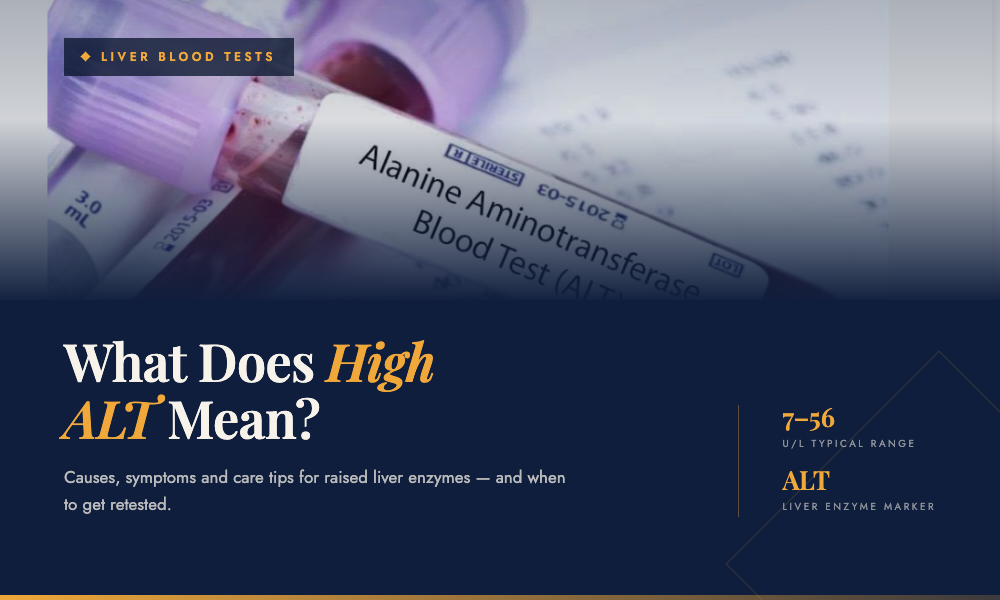
In the early stages, usually not. Doctors often find F1 to F3 fibrosis by chance, for example when a routine blood test shows raised liver enzymes. If you have had a result like this, our article on what a high ALT means is a helpful next read.
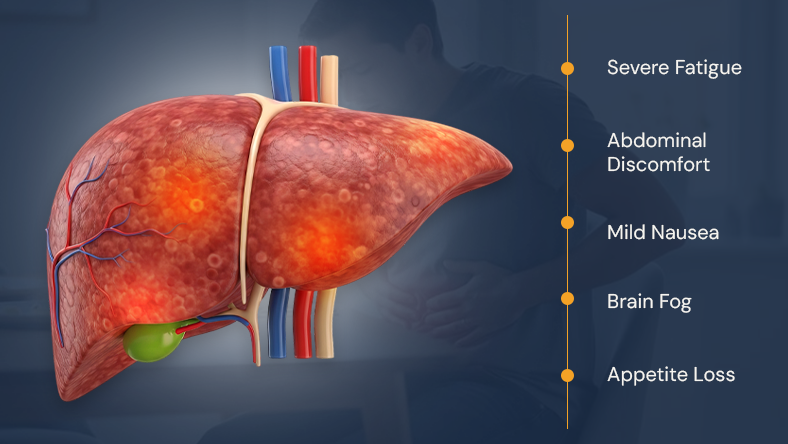
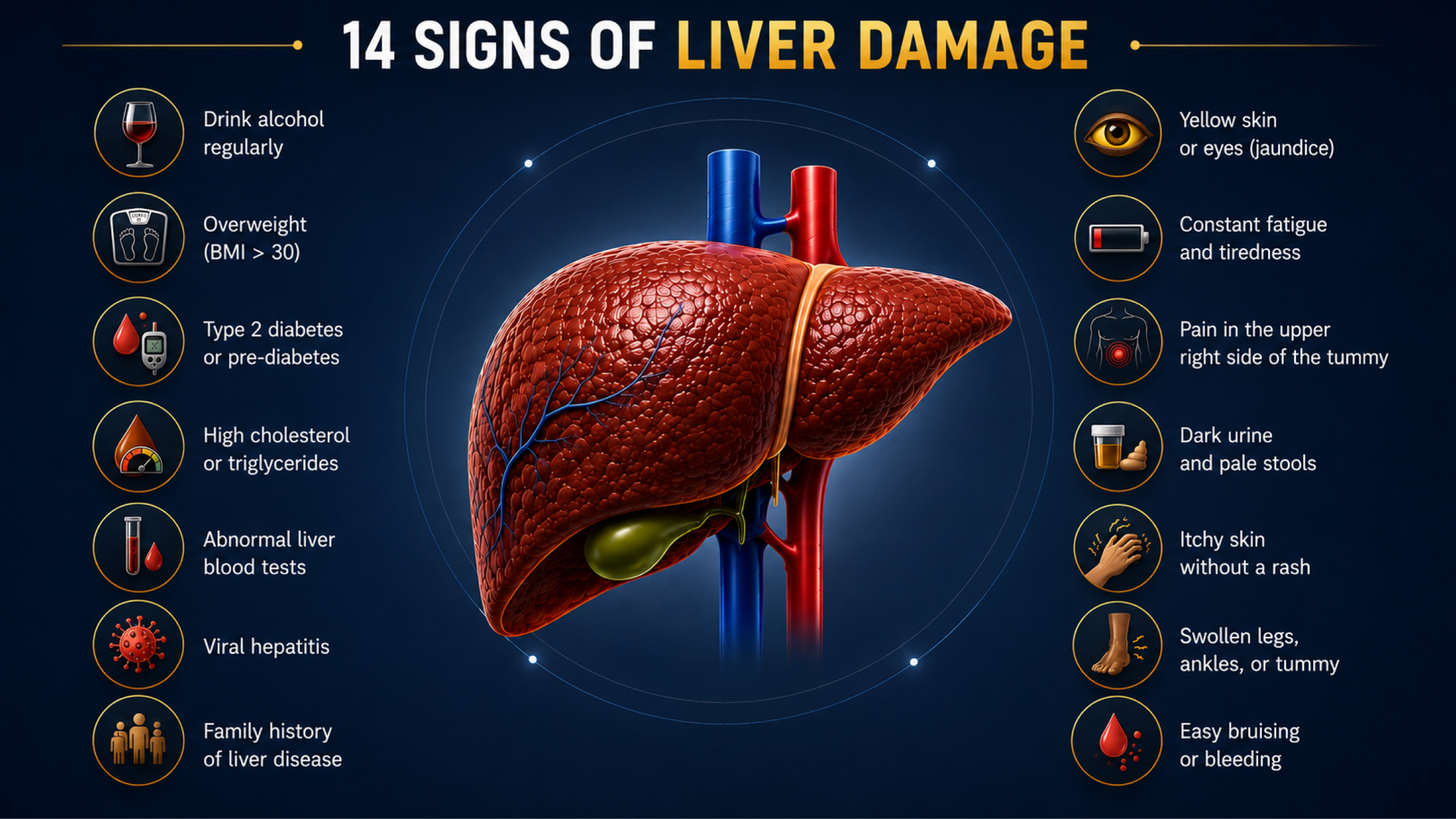
Where symptoms appear, they tend to be vague, such as tiredness or discomfort under the right ribs. Yellowing of the skin or eyes, or a swollen tummy or legs, usually points to more advanced disease. Read more in our guide to the signs of liver damage.

Not Sure What Stage Your Liver Is At?
- Liver scars often cause no symptoms. A Fibrosis Scan and blood tests can check for them in one visit.
- Consultant-led Liver Health MOT at House of Health, central Birmingham.
- Results explained to you on the same day.
- No GP referral needed.
How are liver fibrosis stages diagnosed?
There is no single perfect test. Doctors combine several results with your history to estimate your stage.
Liver blood tests
A standard liver function test checks enzymes such as ALT, AST and GGT, along with bilirubin and albumin. These can spot a problem, but normal results do not rule out scarring. NICE advises against using routine liver blood tests alone to assess advanced fibrosis.
Fibrosis scores: FIB-4 and ELF
FIB-4 is a calculation based on your age, AST, ALT and platelet count. Liver UK gives these general guide ranges, while stressing that cut-offs can vary:
- Below 1.3: low risk of advanced fibrosis
- 1.3 to 3.25: indeterminate risk
- Above 3.25: high risk of advanced fibrosis
FIB-4 is most reliable between the ages of 35 and 65.
The ELF (enhanced liver fibrosis) test is a separate blood test. NICE recommends considering it for people with MASLD, and uses a score of 10.51 or above to diagnose advanced fibrosis.
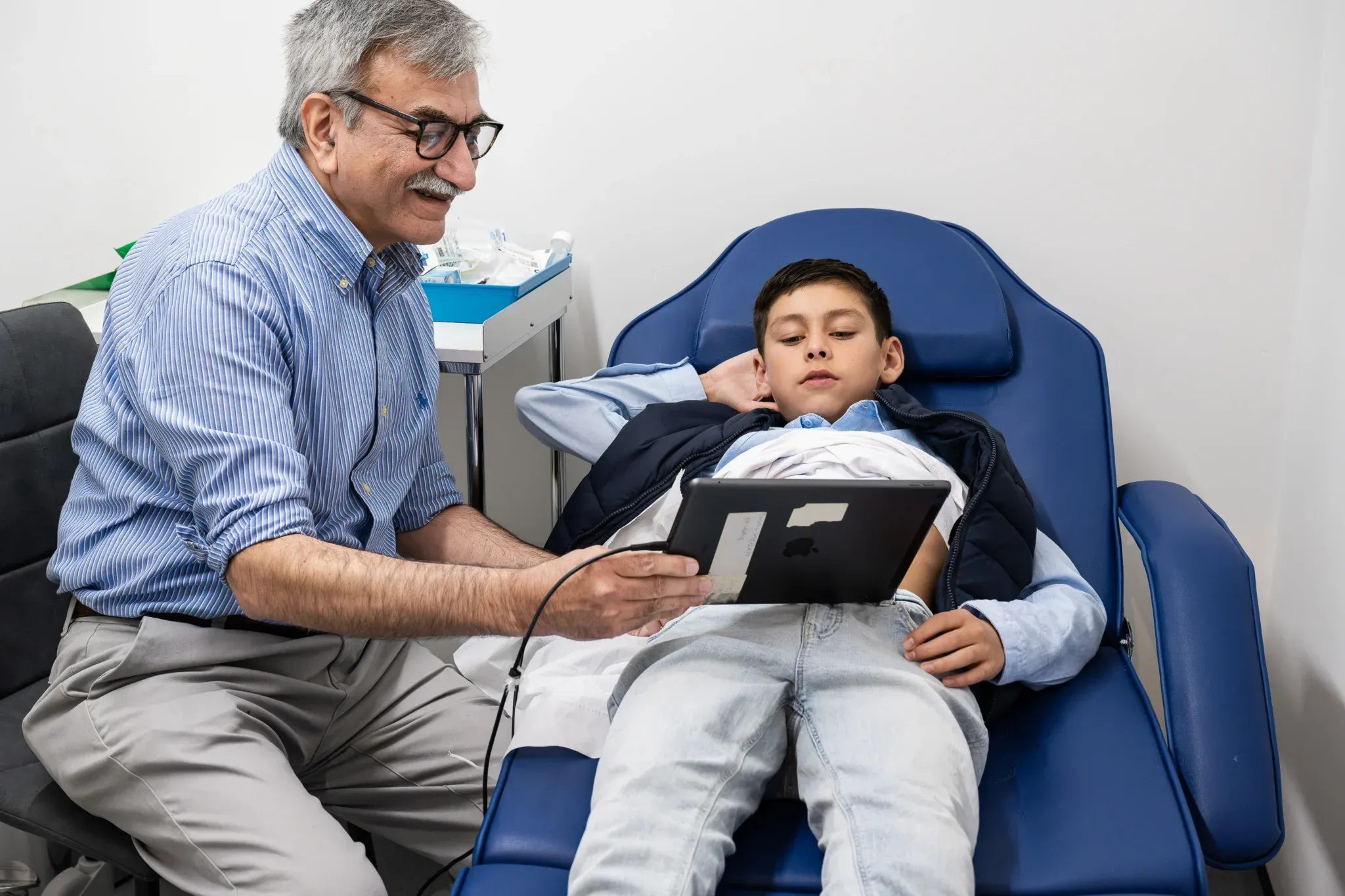
Fibrosis Scan (transient elastography)
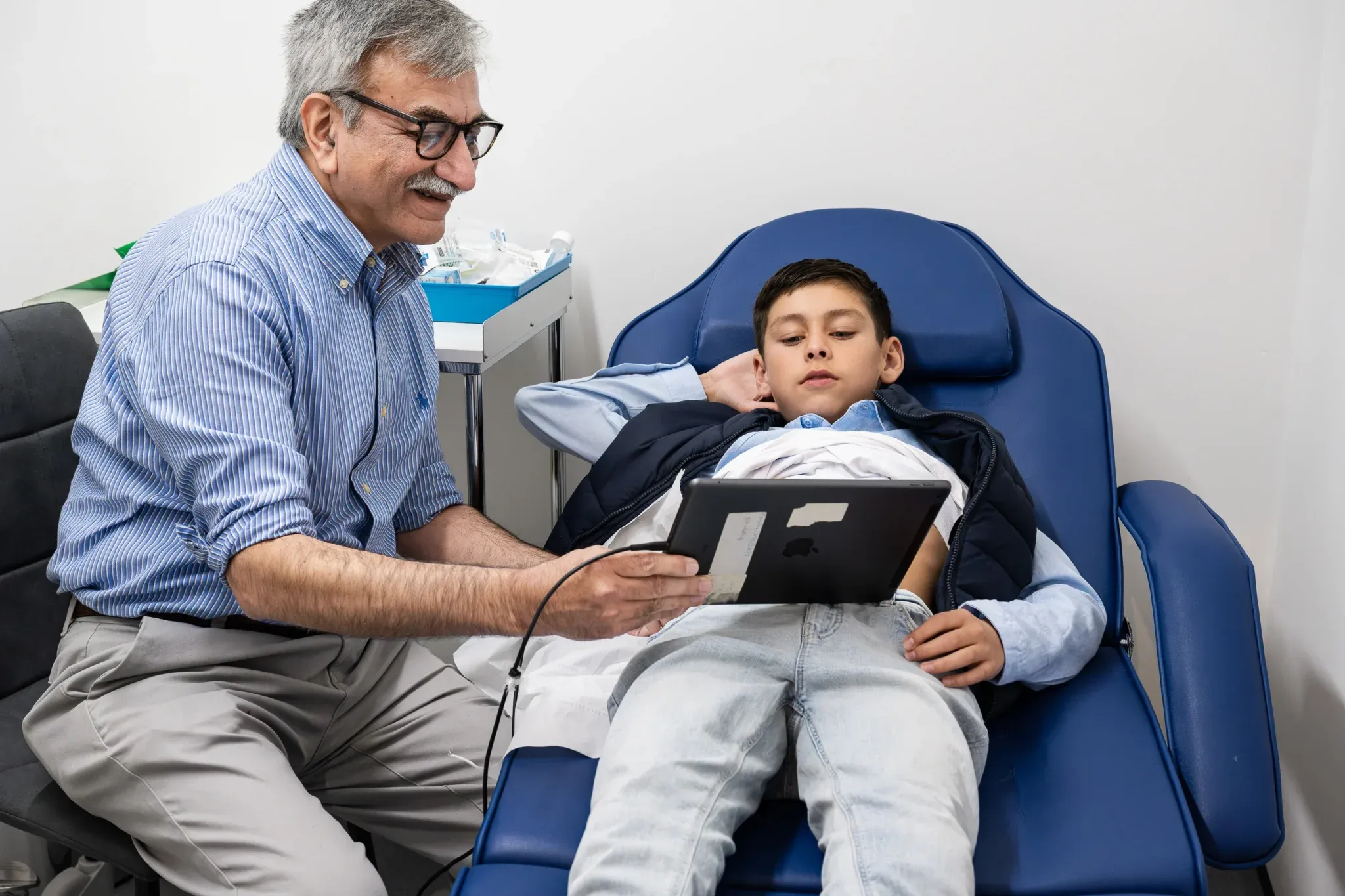
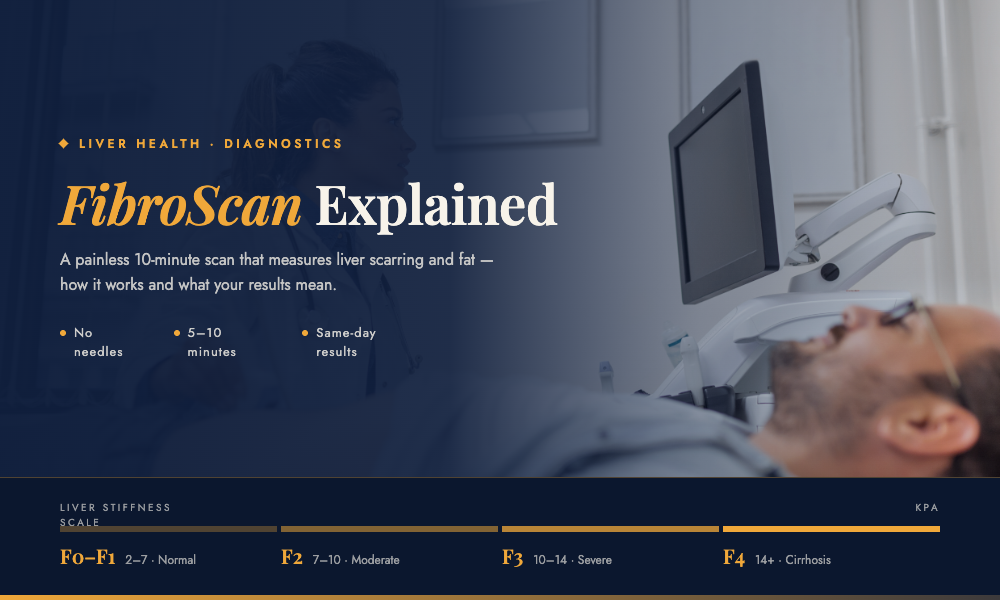
A Fibrosis Scan, also known as transient elastography or by the brand name FibroScan, uses a gentle pulse to measure how stiff your liver is, in kilopascals (kPa). Stiffer liver tissue generally means more scarring. Many devices also give a CAP score, which estimates how much fat is in the liver.
The scan is quick and painless, but no single 'normal' kPa number applies to everyone. Cut-offs differ depending on the cause of your liver disease, and Liver UK explains that you need to interpret a stiffness reading alongside your other results. That is why having your scan read by a liver specialist matters. To find out what happens on the day, see our guide to the fibrosis scan. House of Health offers a private Fibrosis Scan in Birmingham.
NICE recommends transient elastography to diagnose cirrhosis in certain groups, including people with hepatitis C, people with alcohol-related liver disease and people with MASLD who have advanced fibrosis (NICE NG50).
Ultrasound and liver biopsy
An ultrasound can show fat in the liver and changes linked to cirrhosis. A liver biopsy, where a small tissue sample is examined under a microscope, is the traditional way to stage fibrosis, but because it is invasive, it is now usually kept for cases where other tests are unclear.
Worried Your Fibrosis Could Get Worse?
- The sooner you act, the more your liver can heal.
- Scan, blood tests and consultant review in one visit.
- Clear written report within 48 hours.
- A plan you can follow, led by Consultant Hepatologist Dr Nadir Abbas.
Can liver fibrosis be reversed?
Often, yes, especially in the earlier stages. Liver UK explains that the best way to stop fibrosis is to remove the underlying cause, and that depending on how badly scarred the liver is, it may be able to repair some or all of the damage. In practice, this can mean:
- losing weight and eating a healthier diet
- stopping or cutting down alcohol
- treating viral hepatitis
- controlling an autoimmune or inherited condition
As a general guide:
- F0 to F2: the outlook for improvement is good when you address the cause.
- F3: still potentially reversible. Research in people treated for hepatitis C shows fibrosis can regress after the virus is cleared, though not everyone improves (Journal of Hepatology).
- F4 (cirrhosis): usually involves permanent damage, but stopping further injury can help the liver keep working and lowers the risk of complications.
Improvement time varies from person to person. Our article on how long it takes to reverse fatty liver covers this in more detail.
Fibrosis usually develops slowly, over years or decades, but it can be faster for some people. Liver UK reports that of every 100 people with early-stage MASLD, around 10 to 30 go on to develop advanced scarring and more serious liver disease. The risk is higher in people living with obesity or type 2 diabetes.
What you can do to protect your liver
Whatever your stage, the NHS recommends:
- eating a healthy, balanced diet (see our guide to foods to eat and avoid with fatty liver)
- aiming for at least 150 minutes of exercise a week
- losing weight if you are overweight
- keeping alcohol within 14 units a week, or stopping completely if advised
- not smoking
If you have significant or advanced fibrosis, you will also need specialist follow-up. Do not start supplements or stop prescribed medicines without speaking to your doctor first.
When to see a doctor
Speak to a GP or liver specialist if:
- you have been told your liver blood tests are abnormal
- you have risk factors such as type 2 diabetes, obesity, regular heavy drinking or a history of hepatitis
- you have a scan or test result showing fibrosis and are unsure what it means
The NHS advises people with cirrhosis to ask for an urgent GP appointment or contact NHS 111 if their skin or the whites of their eyes turn yellow, they become more short of breath, or their tummy, legs, ankles or feet swell. Call 999 or go to A&E if you are vomiting blood, your poo is very dark or black, or you suddenly become confused or have slurred speech.
Frequently asked questions
How many stages of liver fibrosis are there?
Using the METAVIR scale, there are five: F0 (no fibrosis), F1 (mild), F2 (moderate), F3 (advanced) and F4 (cirrhosis). Some other systems use more stages, but F0 to F4 is the most common.
Is stage 3 liver fibrosis reversible?
It can be. F3 is advanced, but it is not cirrhosis, and the liver can still repair a lot of damage once the cause is controlled. Specialist care and regular monitoring are important at this stage.
What is the life expectancy with liver fibrosis?
There is no single answer. It depends on your stage, the cause, your overall health and whether the cause is treated. For many people with early fibrosis, managing the cause can stop it progressing. The risk of serious complications rises with more advanced scarring, especially cirrhosis, so it is best to discuss your own outlook with a liver specialist.
Can a Fibrosis Scan tell me my exact stage?
A Fibrosis Scan measures liver stiffness, which strongly suggests how much scarring there is. However, cut-offs vary by cause, so interpret your result alongside blood tests and your medical history to estimate your stage.
Can you have liver fibrosis with normal liver blood tests?
Yes. Liver enzymes can be normal even with scarring, which is why NICE advises against relying on routine liver blood tests alone to assess advanced fibrosis.
Is liver fibrosis the same as cirrhosis?
No. Cirrhosis is the most severe stage of fibrosis (F4). Fibrosis at stages F1 to F3 is scarring that has not yet reached cirrhosis. Find out more on our cirrhosis page.