

You may have just seen 'F1', 'F2', 'F3' or 'F4' on a scan report or a clinic letter. Naturally, you'll want to know what it means for your future. Searching for liver fibrosis life expectancy online can bring up frightening numbers with very little context, and that rarely helps.
So here is the honest answer. For most people with F1 or F2 fibrosis, the outlook is good, especially when you find and treat the cause. F3 is a warning sign that needs specialist care, but it is not cirrhosis, and it can still improve. F4 means cirrhosis, and even then many people live for many years. This guide explains what each stage means for your outlook, what changes it most, and what to do next.
Key Takeaways
- No single life expectancy figure applies to each fibrosis stage. Your outlook depends on the cause, your age, your other health conditions and whether the damage is still happening.
- F1 and F2 (mild to moderate fibrosis) usually have a good outlook if you treat the cause. Scarring at these stages can often stop and may improve.
- F3 (advanced or bridging fibrosis) is the stage to take seriously. Research links it to a clearly higher risk of liver problems, but it can still be stabilised or improved.
- F4 is cirrhosis. Outlook depends mainly on whether it is compensated (the liver is coping) or decompensated (the liver is struggling). You can live for years with compensated cirrhosis.
- Removing the cause is the single biggest thing you can do, whether that means losing weight, stopping alcohol or treating viral hepatitis.
What 'Life Expectancy' Really Means for Liver Fibrosis
When people search for life expectancy with liver fibrosis, they often hope for a number. However, doctors do not give one fixed figure for each stage, and for good reason.
Fibrosis stage is one important factor, but it is not the only one. Your outlook also depends on:
- The cause of the damage, such as fatty liver disease (MASLD), alcohol, hepatitis B or C, or an autoimmune condition.
- Whether the cause is still active. Scarring that is no longer progressing behaves very differently from scarring that is still building.
- For F4, whether cirrhosis is compensated or decompensated.
- Your age and other conditions, such as type 2 diabetes, heart disease and kidney disease.
In fact, the NHS notes that fatty liver disease is also linked to a higher risk of heart disease, kidney disease and type 2 diabetes (NHS). That's why a good liver plan also looks after your heart, blood sugar and blood pressure.
The research clearly shows a pattern. A large international study of people with fatty liver disease found that fibrosis stage, rather than other features seen on a biopsy, was the feature most strongly linked to long-term outcomes (Angulo et al., 2015). A later review found that risk rose with each stage, gently at F1 and much more steeply at F3 and F4 (Dulai et al., 2017). So the stage matters, but it is a guide to risk, not a countdown.
F1 to F4 at a Glance
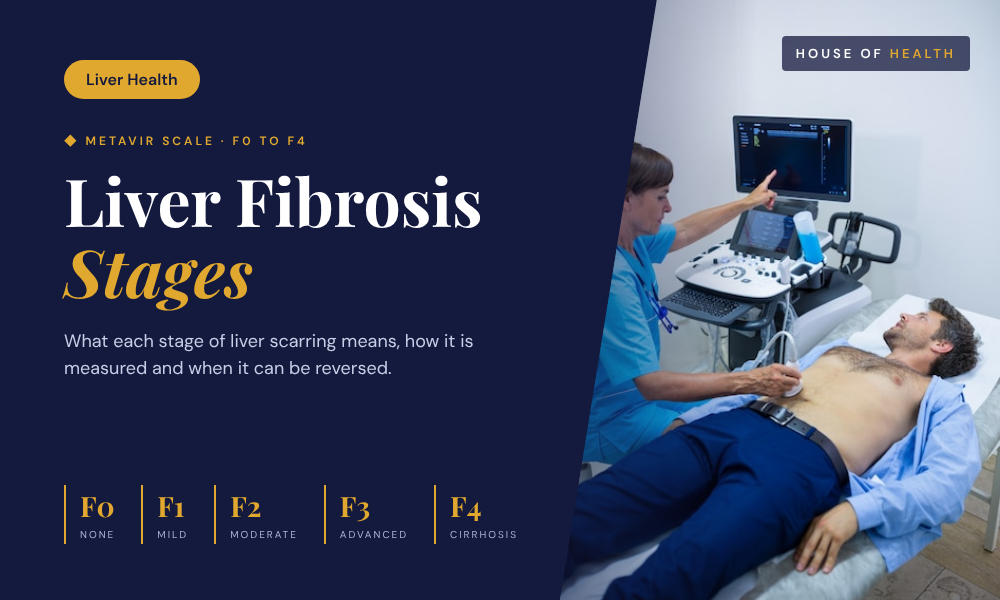
This table gives a quick summary. For a full explanation of what each stage looks like inside the liver, read our guide to liver fibrosis stages.
| Stage | What it means | Outlook in practice |
|---|---|---|
| F0 | No scarring | Reassuring. Any fat or inflammation can usually be reversed |
| F1 | Mild fibrosis | Usually good. Often stops or improves once the cause is treated |
| F2 | Moderate fibrosis | Usually good with action. A clear signal to make changes and be monitored |
| F3 | Advanced (bridging) fibrosis | Higher risk. Needs specialist care, but can still stabilise or improve |
| F4 | Cirrhosis | Many people live for years if it stays compensated. Needs regular specialist checks |

Want a Clear Stage Result, Not Guesswork?
- Fibrosis Scan and liver blood tests in one visit, interpreted by Consultant Hepatologist Dr Nadir Abbas.
- Your results explained on the same day, with a formal written report within 48 hours.
- No GP referral needed, at our clinic in Birmingham's Jewellery Quarter.
F1 Liver Fibrosis Life Expectancy
F1 means a small amount of scarring. For most people, F1 liver fibrosis is not expected to shorten life on its own, particularly when the cause is identified and managed.
Liver UK explains that if fibrosis is stopped early enough, the liver can carry on working normally and may even repair the damage completely (Liver UK). In research, the extra risk linked to F1 is small compared with later stages.
However, F1 is still a message from your liver. It tells you something is causing damage. If you have a fatty liver, our guide to life expectancy with fatty liver disease explains the outlook for fat alone, before scarring.
F2 Liver Fibrosis Life Expectancy
F2 means moderate scarring. Stage 2 liver fibrosis life expectancy is usually still good, but this is the point to act rather than wait.
Without changes, fibrosis can slowly move forward. One review of repeat biopsies found that people with MASH (fatty liver with inflammation) progressed by about one stage every 7 years on average, although some improved and many stayed stable (Singh et al., 2015). So there is usually time, and time is an opportunity.
The good news is that F2 often responds well to treatment. In one study of people with MASH, almost half of those who lost 10% or more of their body weight saw their fibrosis improve (Vilar-Gomez et al., 2015). If you want to know how long improvement can take, read our guide on how long it takes to reverse fatty liver.
F3 Liver Fibrosis Life Expectancy
F3, also called advanced or bridging fibrosis, means bands of scar tissue are starting to link up across the liver. This is the stage where outlook starts to change more noticeably, so it is important to be honest about it.
A large prospective study found that people with F3 had higher rates of liver-related complications and death than people with F0 to F2 (Sanyal et al., 2021). That said, F3 is not cirrhosis. Many people with F3 live long lives, especially once they control the cause.
So, what does life expectancy at stage 3 liver fibrosis depend on? Mainly on what happens next. NICE advises referring people with fatty liver disease and advanced fibrosis to a liver specialist (NICE NG49). With specialist monitoring and steady lifestyle changes, F3 can stabilise and sometimes improve. If your F3 is linked to fatty liver disease with inflammation, our MASH condition page explains the treatment options.
F4 Liver Fibrosis Life Expectancy (Cirrhosis)
F4 is cirrhosis. This is the stage people fear most, so let's be calm and clear.
The NHS says that how serious cirrhosis is depends on things like its cause and how early it is diagnosed and treated, and that many people with cirrhosis can feel well and live for many years (NHS). Liver UK adds that many people with cirrhosis will not die from it (Liver UK).
The biggest factor in F4 liver fibrosis life expectancy is whether cirrhosis is compensated or decompensated:
- Compensated cirrhosis means the liver is scarred but still coping. Many people feel well, and you can live for years at this stage.
- Decompensated cirrhosis means the liver is no longer coping. Signs include jaundice, fluid in the tummy (ascites), confusion or internal bleeding. The outlook is more serious, and urgent treatment is often needed.
Importantly, Liver UK notes that it is often possible to slow compensated cirrhosis so it does not become decompensated, and that decompensation can sometimes be reversed by treating the cause or trigger. Cirrhosis usually cannot be cured, but the right care can protect the liver you have. For more detail, see our cirrhosis condition page.
What Most Strongly Changes Your Outlook
Whatever your stage, these factors make the biggest difference, and most are within your control.
- Removing the cause. Liver UK says the best way to stop fibrosis is to take away the underlying cause (Liver UK). That may mean losing weight, stopping alcohol, treating viral hepatitis or controlling an autoimmune condition.
- Losing weight if you carry extra. Losing 5% to 10% of your body weight can improve fat, inflammation and even scarring, with the biggest benefits seen at 10% or more. Our guide to foods to avoid and eat with fatty liver is a practical place to start.
- Cutting out alcohol. If you have F3 or F4, stopping completely is strongly advised. If alcohol is the cause, the NHS notes the liver can often recover if you stop drinking (NHS). If you drink heavily, get medical help before stopping. Learn more about alcohol-related liver disease.
- Control diabetes, blood pressure, and cholesterol, and don't smoke. In the Angulo study, diabetes and smoking were both linked to poorer outcomes.
- Regular specialist monitoring. Repeat testing shows whether your fibrosis is improving, stable or progressing, so your plan can change in time.
How Doctors Estimate Your Stage and Risk
You cannot feel fibrosis, and normal liver blood tests do not rule it out. In fact, NICE advises against using routine liver blood tests alone to check for advanced fibrosis in fatty liver disease. That's why doctors combine several tests.
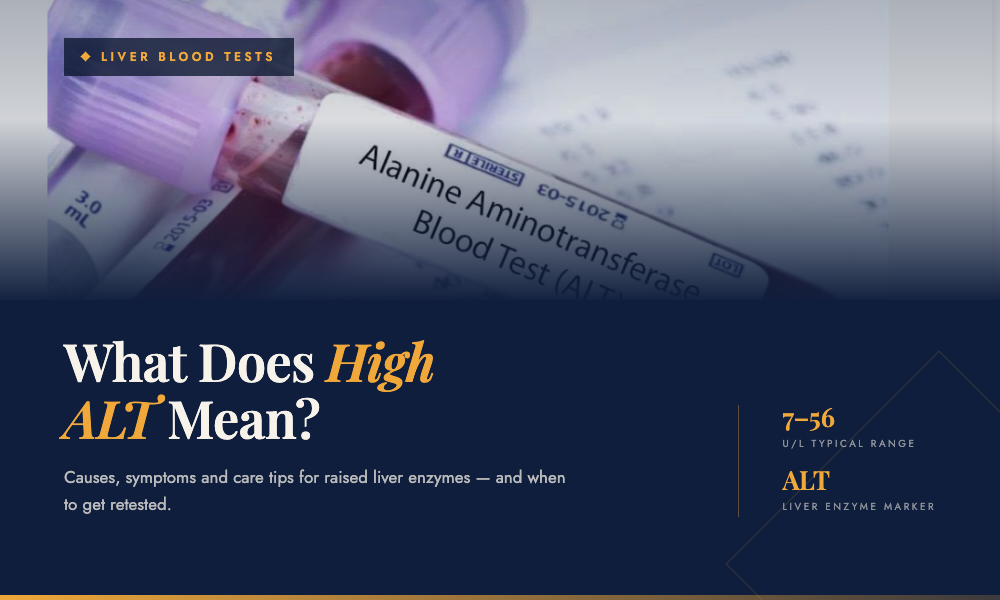
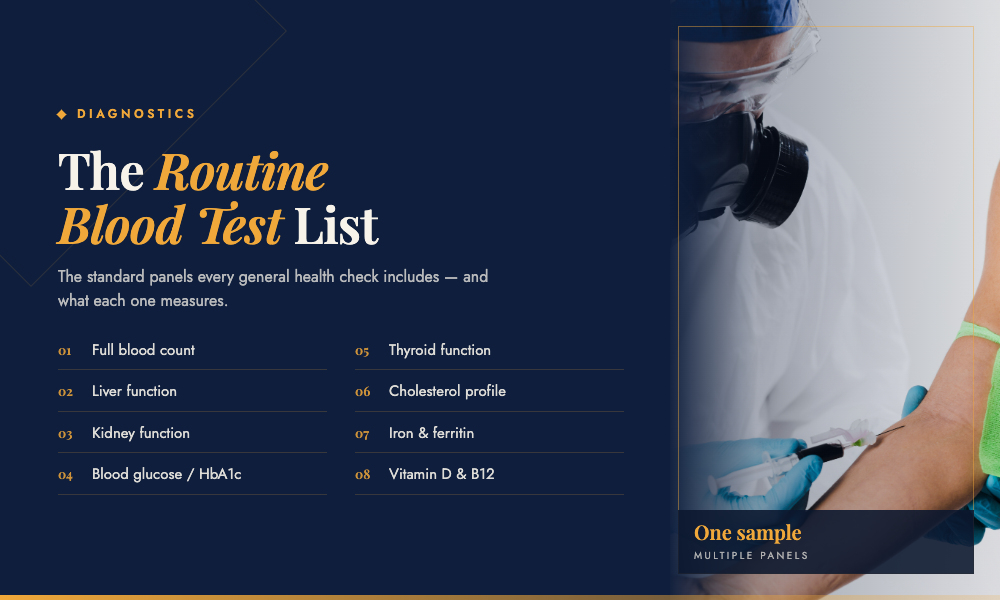
- Liver blood tests. A liver function test checks enzymes such as ALT and AST. If yours are raised, read what a high ALT means.
- FIB-4 and ELF scores. FIB-4 is calculated from your age and routine bloods. ELF is a separate blood test that looks for signs of scarring. Liver UK explains that fibrosis scores can improve or worsen, so they are often repeated (Liver UK).
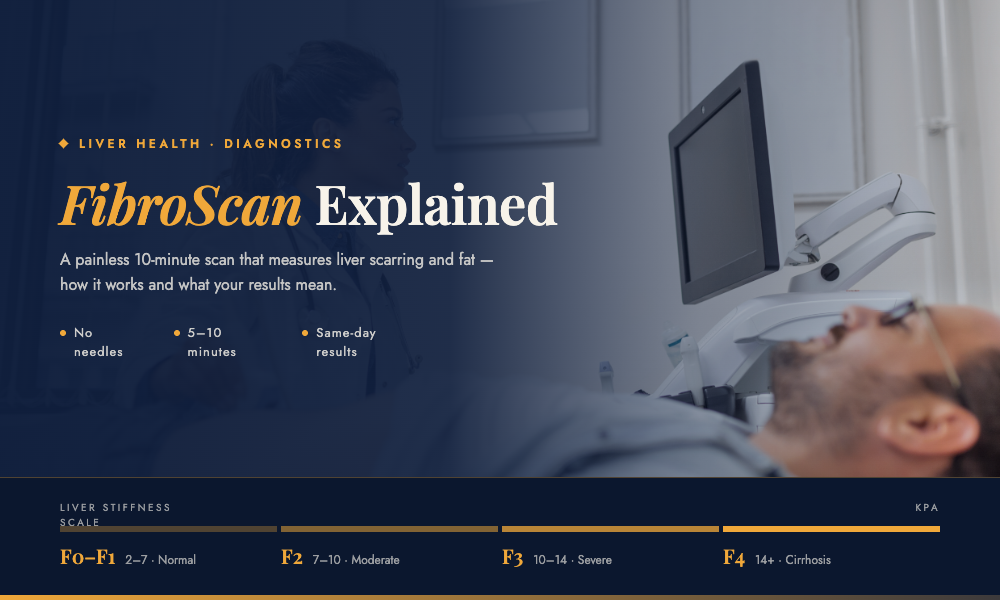
- Fibrosis Scan. A Fibrosis Scan, also known as transient elastography or VCTE, or by the brand name FibroScan, measures how stiff your liver is. Stiffer tissue usually means more scarring. The scan is quick and painless, and the machine gives a result straight away. If you have fatty liver, see our guide to FibroScan for fatty liver (Liver UK).
No single test is perfect, so a specialist reviews the results alongside your history. Find out what to expect in our Fibrosis Scan guide.
Told You Have F2, F3 or F4 and Need Specialist Advice?
- See Consultant Hepatologist Dr Nadir Abbas directly, with no GP referral.
- Bring your previous scan and blood results for a full review.
- Get a personalised plan and clear next steps, explained on the same day.
When to See a Doctor
Speak to a GP or liver specialist if:
- you have been given a fibrosis stage and are not sure what it means for you
- you have F2 or above and have not yet seen a liver specialist
- you have type 2 diabetes, obesity or drink more than 14 units a week
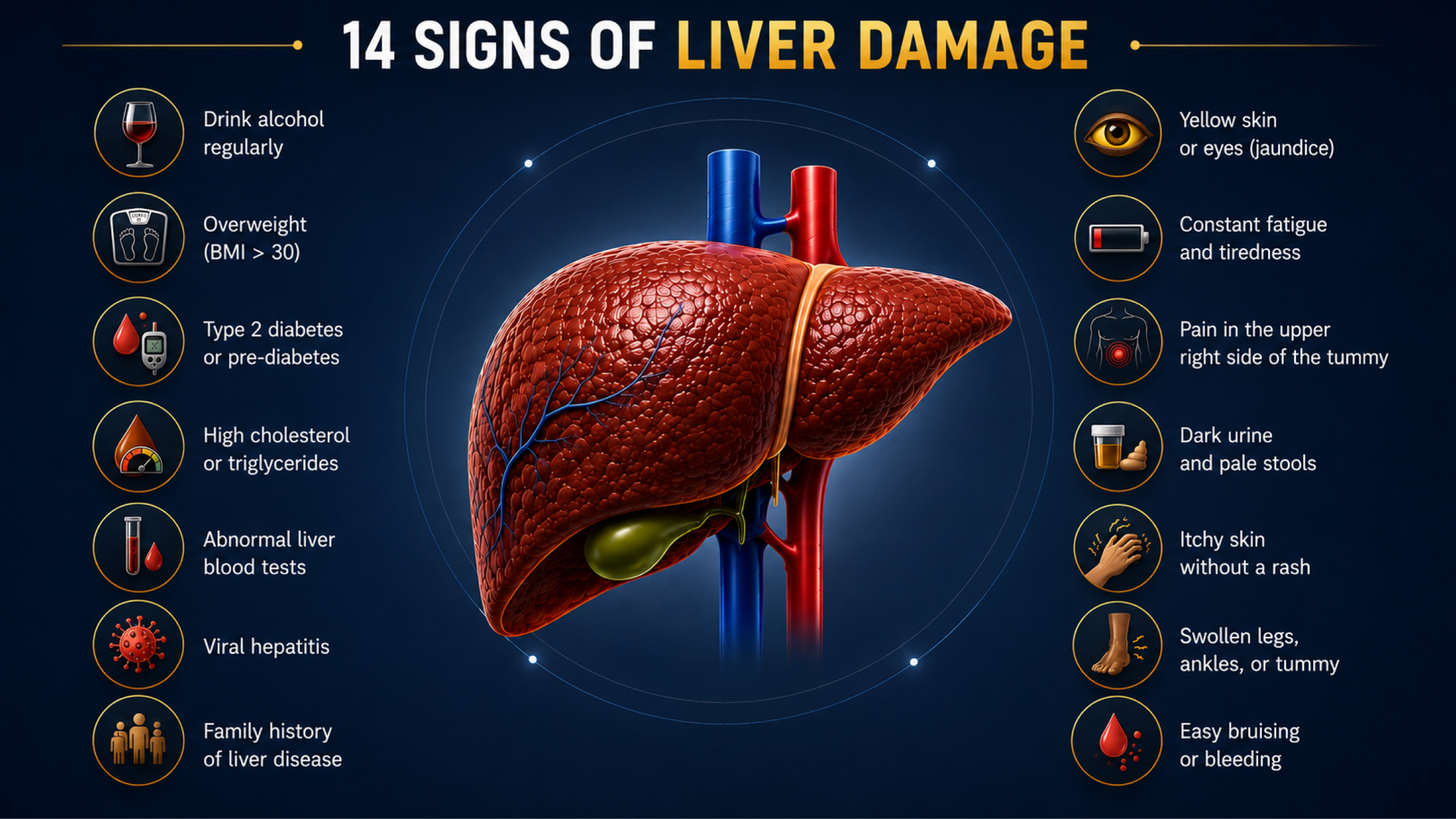
The NHS advises people with cirrhosis to get an urgent GP appointment or call 111 if their skin or eyes turn yellow, they become more breathless, or their tummy, legs or ankles swell. Call 999 or go to A&E if you vomit blood, have very dark or black poo, or suddenly become confused or have slurred speech. You can read more in our guide to the signs of liver damage.
Conclusion
Liver fibrosis life expectancy is not a single number. For most people with F1 or F2, the outlook is good, and scarring can often stop or improve once you treat the cause. F3 needs specialist care, but it can still be stabilised. F4 means cirrhosis, yet many people live for years, especially while it stays compensated.
The most useful step is to know your exact stage, understand what is driving it and check that your plan is working. Your stage is a starting point, not a verdict.
If you have been given a fibrosis stage and want a clear plan, House of Health can help. You can see Dr Nadir Abbas, Consultant Hepatologist and Gastroenterologist, without a GP referral. Learn more about our Consultant Hepatologist service.
Frequently Asked Questions
What is the life expectancy with liver fibrosis?
There is no single figure. For most people with F1 or F2, life expectancy is not expected to be greatly affected, especially once the cause is treated. Risk rises at F3 and F4, and depends on the cause, your age and your other conditions.
How long can you live with liver fibrosis?
Many people with early fibrosis live a normal or near-normal lifespan. Even with cirrhosis, the NHS says many people feel well and live for many years.
What is the life expectancy for F1 liver fibrosis?
F1 is mild scarring. For most people, it is not expected to shorten life, and it can often stop or improve once you address the cause.
What is the life expectancy for F2 liver fibrosis?
F2 usually still carries a good outlook. It signals the need to make changes and be monitored, because fibrosis can progress slowly over years if the cause continues.
What is the life expectancy with stage 3 liver fibrosis?
Stage 3 (F3) is linked to a higher risk of liver complications than earlier stages. However, it is not cirrhosis, and with specialist care it can stabilise or improve.
What is the life expectancy for F4 liver fibrosis?
F4 is cirrhosis. If it is compensated, many people live for years and feel well. If it becomes decompensated, the outlook is more serious.
Is stage 4 liver fibrosis the same as cirrhosis?
Yes. Stage 4 and F4 both mean cirrhosis, which is the most advanced stage of scarring.
Can liver fibrosis be reversed?
Often, yes, at earlier stages. Liver UK explains that the liver may repair some or all of the damage if the cause is removed early enough. Our guide on whether the liver can repair itself explains what heals and how long it takes. Read more in our guide on whether liver disease can be cured.
Is advanced liver fibrosis a death sentence?
No. Advanced fibrosis (F3) is serious, but many people live for many years. Treating the cause and specialist monitoring can improve your outlook.
Do I need a GP referral for a Fibrosis Scan at House of Health?
No. You can book a Liver Health MOT or a consultation with our Consultant Hepatologist directly, and bring any previous blood tests or scan reports.